
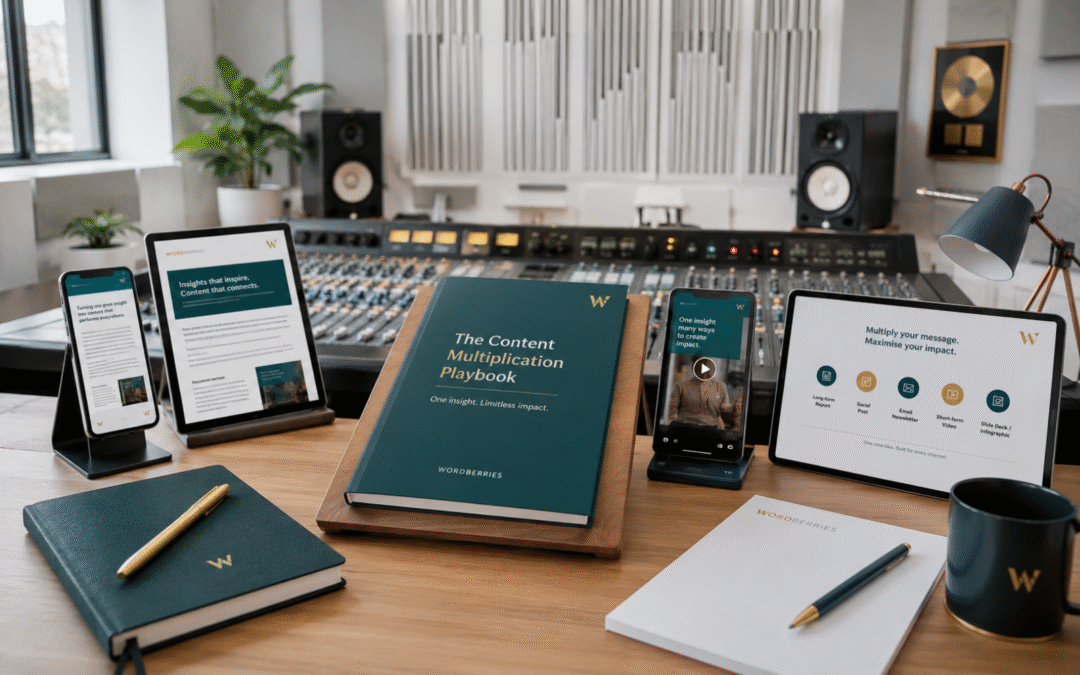
There is a brilliant reason music producers love a remix. They do not crawl back into the recording studio to write a fresh melody, hire a new vocalist, and record twelve new instruments from scratch just to appeal to a different dancefloor. Instead, they take the master track—the core hook that already works—and tweak the tempo, drop the bass, or strip back the vocals.
Yet, in the content marketing world, we often do the exact opposite.
We treat every single platform like a brand-new recording session. We write a 2,000-word guide, hit publish, and then immediately stare at a blank Google Doc trying to conjure a completely unrelated LinkedIn post, a fresh newsletter angle, and a script for a short-form video.
It is exhausting. It is also a terrible waste of creative energy.
The secret to scaling your brand’s voice without burning out your team is not creating more. It is about mastering the art of the remix: taking one deeply researched, high-value insight and spinning it into a self-sustaining multi-channel ecosystem.
The exhaustion of the blank page
Most content calendars look like a frantic shopping list. You have slots to fill for Tuesday’s newsletter, Wednesday’s LinkedIn update, and Thursday’s blog post. When you treat these channels as separate creative starting points, two things happen.
First, your quality plummets. You simply do not have the time to make every single piece of content a masterpiece.
Second, your brand message fractures. Your audience gets a scattered mix of thoughts rather than a cohesive, authoritative point of view.
By shifting from a “creation” mindset to a “distribution” mindset, you stop treating your channels as hungry mouths to feed. Instead, you treat them as different windows looking into the same beautiful room.
What is a content remix? (and what it isn’t)
Let us clear up a common misconception. A remix is not lazy cross-posting.
Taking a paragraph from your latest blog post, slapping it onto LinkedIn with a “read more” link, and auto-publishing the same text to Twitter is not a remix. That is just digital litter. It ignores how people actually behave on those platforms.
A true remix respects the native culture of each channel.
Think of it this way:
- The master track: A comprehensive, data-backed guide on how mid-sized logistics firms can survive fuel price hikes.
- The lazy cross-post: “We wrote a blog about fuel prices. Link in bio!”
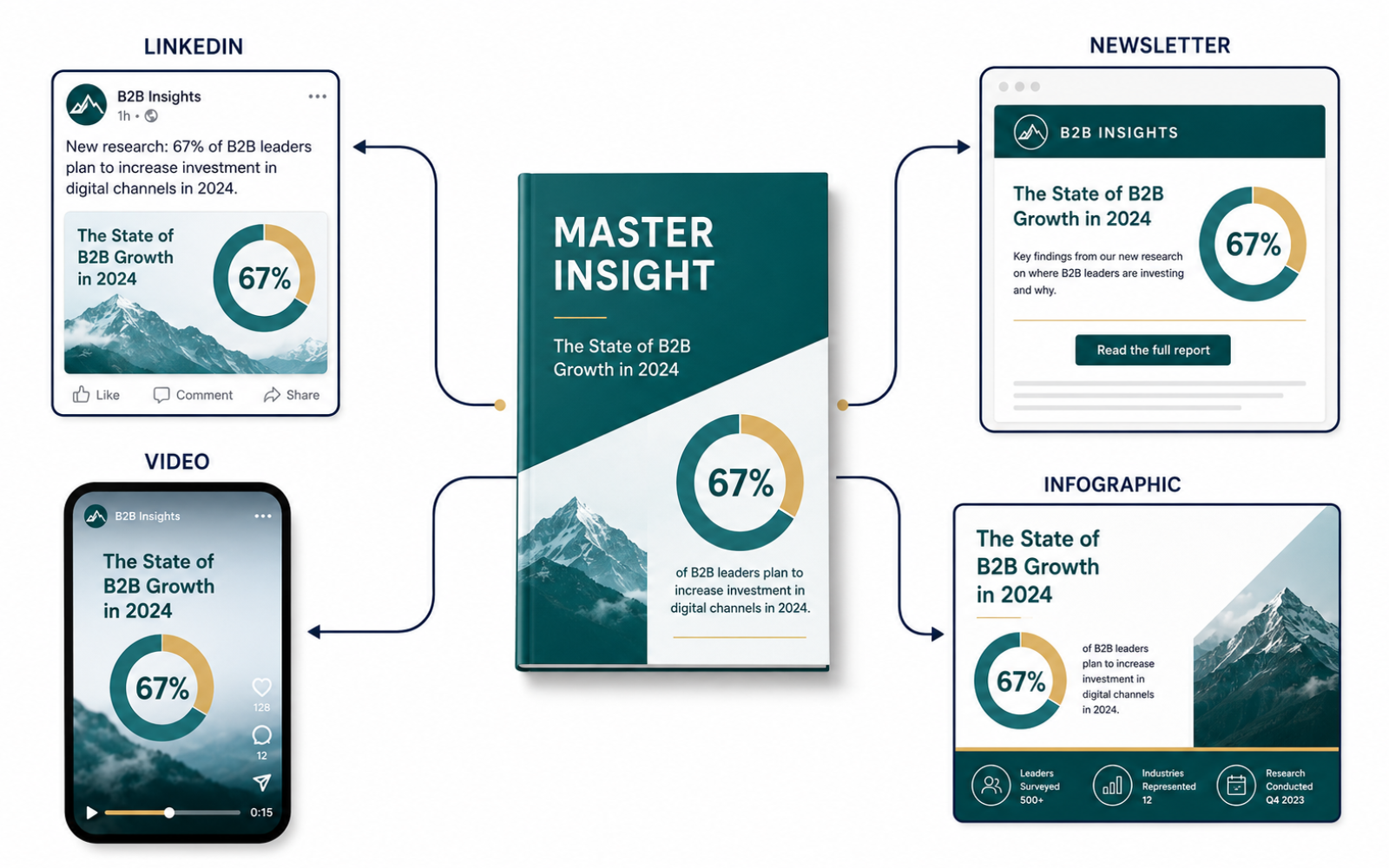
- The remix: A sharp LinkedIn text post detailing the single most surprising mistake these firms make, a colourful infographic showing the cost breakdown, and a quick, punchy voice note on your newsletter explaining the human side of the crisis.
The core insight remains identical. The delivery is entirely customised.
The anatomy of a master track: finding your core insight
You cannot remix a song that has no melody. Likewise, you cannot remix a piece of content that has no real substance.
Before you build your ecosystem, you need a strong anchor asset. This is your master track. It could be a proprietary research report, a deep-dive opinion piece on an industry shift, or a highly detailed case study of a client success story.
To qualify as a master track, your content must have three things:
- A strong point of view: It should take a stand or challenge a common industry assumption.
- Proprietary data or unique experience: Something your competitors cannot easily copy-paste from an AI prompt.
- A modular structure: The piece should naturally break down into distinct, self-contained sub-points.
If your anchor piece is just a generic listicle of “top five industry tips,” any remix you attempt will feel thin and watery. Start with meat on the bone.
Mapping the remix ecosystem
Once you have your master track, you need a systematic way to break it down. You do not want to reinvent the wheel every time you publish.
Here is a simple, structured breakdown of how to translate one major insight across different formats:
| Format | Platform | The job it does | How to adapt it |
|---|---|---|---|
| The Anchor | Website blog / Whitepaper | Establishes depth and search authority. | The comprehensive source of truth. Rich in data, quotes, and frameworks. |
| The Story | LinkedIn / Personal brand | Builds trust and human connection. | Focus on the “behind-the-scenes” struggle or a specific client anecdote from the anchor. |
| The Curator | Email newsletter | Nurtures the existing warm audience. | A conversational letter from the editor summarising the key takeaway and why it matters today. |
| The Visual | Instagram / Slideshare / PDF | Captures scrollers with low attention spans. | Turn a complex process or comparison table from the anchor into a clean, simple graphic. |
| The Quick Take | Short-form video (YouTube Shorts) | Drives top-of-funnel discovery. | A 60-second, hook-driven video focusing on one shocking stat or contrarian opinion. |
Designing for the platform, not just the copy-paste tool
To make this work, you must understand the psychological state of the user on each platform.
Let us use a simple scenario. Imagine a founder, Sarah, who runs a B2B software company. She has just written a master track about why traditional performance reviews are broken.
When Sarah’s audience is on LinkedIn, they are in a professional, networking frame of mind. They want to look smart, join debates, and see how others solve problems. Sarah remixes her article into a text-only post starting with a bold, contrarian statement: “We stopped doing annual performance reviews two years ago. Here is what happened to our retention.” It sparks fifty comments.
The next day, those same readers are opening Sarah’s email newsletter. They are likely drinking coffee, clearing their inbox, and looking for curated, high-value insights. Sarah shifts her tone. She writes a warm, personal note explaining the stress she felt as a manager delivering those reviews, linking directly to her master guide for the solution.
Finally, on YouTube, the audience wants quick, visual stimulation. Sarah films a quick video pointing out the three most awkward phrases managers use during reviews.
Sarah did not write four different articles. She told the same story in four different languages.
The compounding returns of the remix engine
When you commit to this approach, your marketing efficiency sky-rockets.
Instead of spending eighty per cent of your time writing and twenty per cent distributing, you flip the ratio. You spend your energy crafting one truly exceptional piece of thought leadership, and then spend the rest of your week creatively distributing it.
This does more than save your sanity. It actually helps your audience learn.
People need to hear a message multiple times, in different ways, before it truly clicks. One reader might ignore your long-form blog post but stop dead in their tracks when they see your visual slide deck on LinkedIn. Another might delete your newsletter but watch your short-form video.
By remixing your insights, you are not being repetitive. You are being accessible. You are meeting your audience exactly where they are, in the format they prefer.
The next time you sit down to plan your content calendar, step away from the blank document. Look at your archives. Find that one brilliant blog post, that incredible customer success story, or that deep-dive report you published six months ago.
Do not let it sit there gathering digital dust.
Grab your headphones, step into the producer’s booth, and start remixing. Your audience—and your creative team—will thank you for it.