
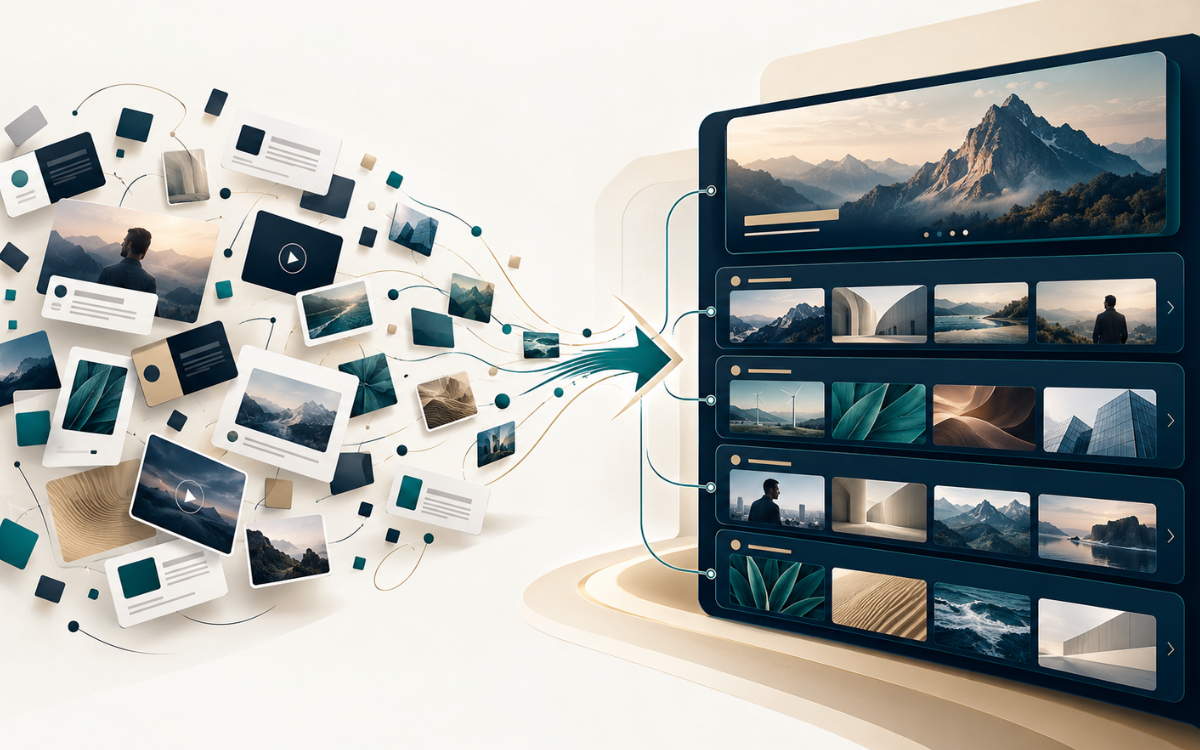
Open a premium streaming app, and you instantly see curated categories, flagship series, and clear themes. Open the average corporate blog, and you usually find a chronological pile of unrelated articles.
Marketing teams spend weeks producing assets, only to publish them once and watch them sink to page two. This happens when businesses treat publishing as a checkbox exercise rather than a cohesive B2B omnichannel strategy.
To fix this, stop acting like a printing press and start thinking like a network executive.
Moving from isolated posts to a connected series
A successful enterprise content strategy relies on momentum. When a streaming platform launches a new show, they do not just release one random episode; they build a universe around it.
In B2B marketing, this means developing core themes rather than chasing isolated keywords for Search Engine Optimisation (SEO).
If you sell compliance software for the healthcare sector, do not just write one surface-level article about regulatory changes. Commission a distinct, multi-part series exploring how different roles—from founders to legal teams—handle the shift.
This approach gives your audience a reason to return. It turns a static website into a destination, encouraging readers to binge your insights exactly as they would a compelling television drama.
Commissioning content your audience actually wants
Network executives do not guess what viewers want; they analyse viewing habits, run pilots, and gather feedback. We apply a similar discipline at WordBerries.
Good work comes from understanding your brand personality, your audience, and your customer’s exact point of view [1].
Before committing budget to a massive B2B omnichannel strategy, test your ideas. Send a short newsletter exploring a new concept. If it gets high engagement, expand it into a comprehensive white paper or a video series.
Let audience behaviour guide your commissioning process. This prevents the costly mistake of producing a heavy, expensive asset that nobody actually asked for, ensuring your resources are spent on narratives that resonate.
Distributing your flagship assets across channels
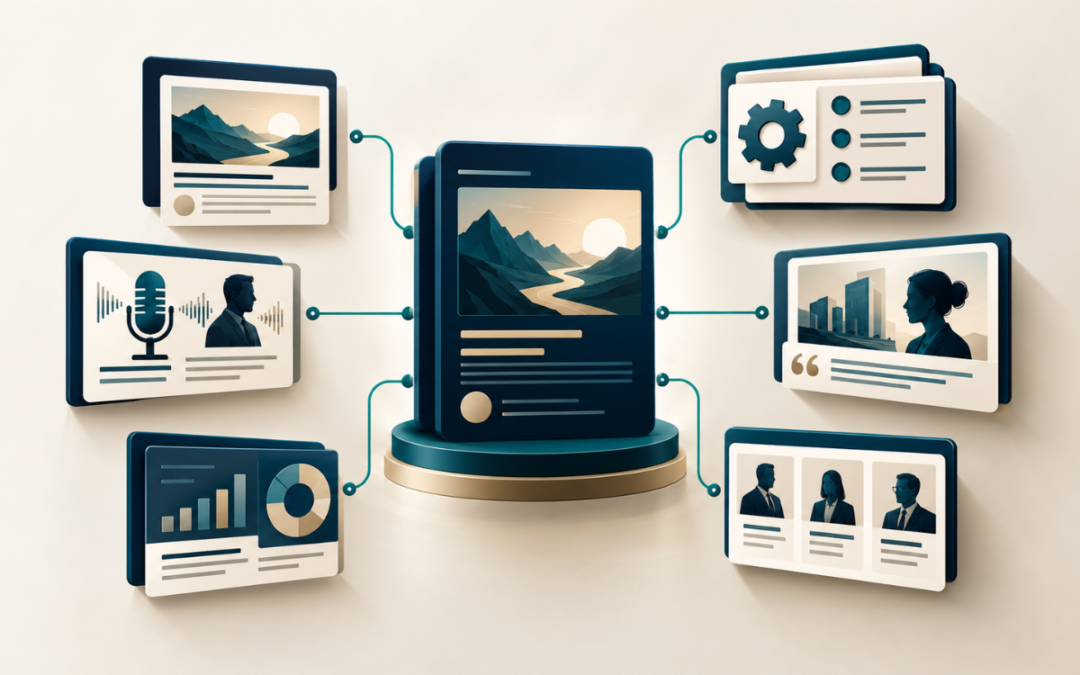
A premium documentary is never just a documentary. It becomes a podcast episode, a social media teaser, and a behind-the-scenes interview.
Your business content should work exactly the same way. A strong B2B omnichannel strategy takes one deep, well-researched asset and adapts it for different platforms.
| Original asset | Adapted format | Channel |
|---|---|---|
| Industry research report | Five-part educational email course | Newsletter |
| Technical white paper | Carousel of key statistics and charts | |
| Founder interview video | Short audio clips and pull quotes | Podcast and social feed |
This is where many teams stumble, confusing lazy cross-posting with genuine adaptation.
A true B2B omnichannel strategy respects the native format of each platform. You must adjust the tone, length, and structure for the specific environment while keeping the core message completely intact.
Measuring performance beyond the initial launch
Television networks do not judge a show solely by its premiere. They track how many people finish the season, re-watch it, and recommend it to friends.
Similarly, your content needs long-term measurement. Instead of just looking at initial page views, monitor how your assets contribute to the wider journey to determine true Return on Investment (ROI).
Are readers signing up for your newsletter after reading a specific series? Are your sales teams using the articles to answer complex questions in their pitches?
Content that continues to work months after publication is the hallmark of a healthy network.
FAQ
What is the first step in treating content like a network?
Start by auditing your existing assets. Group related pieces into thematic series or hubs, making it much easier for your audience to binge-read related topics rather than hunting for scattered information.
How does a B2B omnichannel strategy differ from multichannel marketing?
Multichannel marketing simply means being present on multiple platforms. An omnichannel approach actively connects those platforms, ensuring a connected experience for the user as they move from an email newsletter to a website to a LinkedIn post.
Do we need a massive budget to create flagship content?
No. You can often curate or repurpose existing internal knowledge. A recorded internal presentation by a subject-matter expert can be edited and transformed into a highly valuable public guide without the budget of a Hollywood production.
How often should we publish a new series?
Consistency matters far more than frequency. Whether you release a new major asset quarterly or monthly, maintain a reliable publishing rhythm that your audience can anticipate and trust.
Treating your content like a premium network means prioritising quality, curation, and smart distribution over sheer volume. It requires stepping back from the daily publishing grind to map out a clear, connected narrative that respects your reader’s time.
If you are ready to turn your isolated articles into a cohesive system, we can help you design and execute a strategy that keeps your audience coming back; explore our services at https://wordberries.in/ to start the conversation.