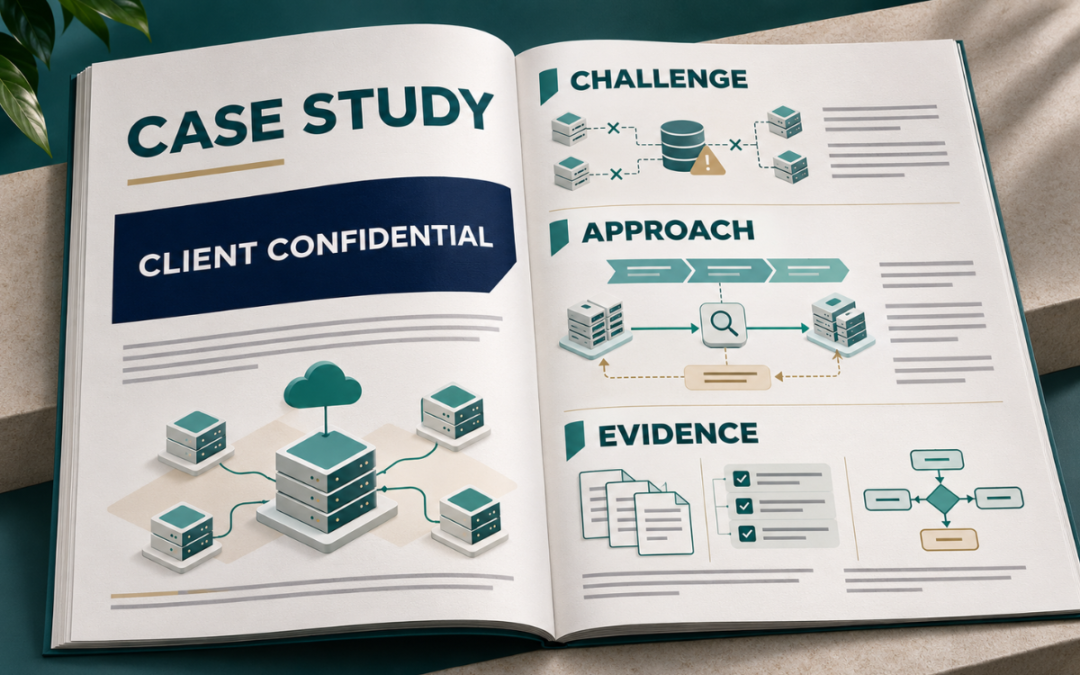
Imagine your team has completed a complex project for a bank. Sales wants a case study, but the client cannot be identified. This is an illustrative situation, not a reported client result.
Start with the agreement: it may restrict more than the name, logo or location. Removing those details is not itself permission to publish.
This is a common hurdle in B2B case study writing, especially for teams in finance, healthcare, or enterprise technology. Consequently, marketing teams often sit on a goldmine of successful projects they feel unable to publish.
The tension between proof and privacy
When readers look at a case study, they are searching for evidence that you can solve their specific problem. A recognisable logo acts as a shortcut to trust; if a famous brand trusted you, readers assume they can too. Without that logo, you must work much harder to prove your competence.
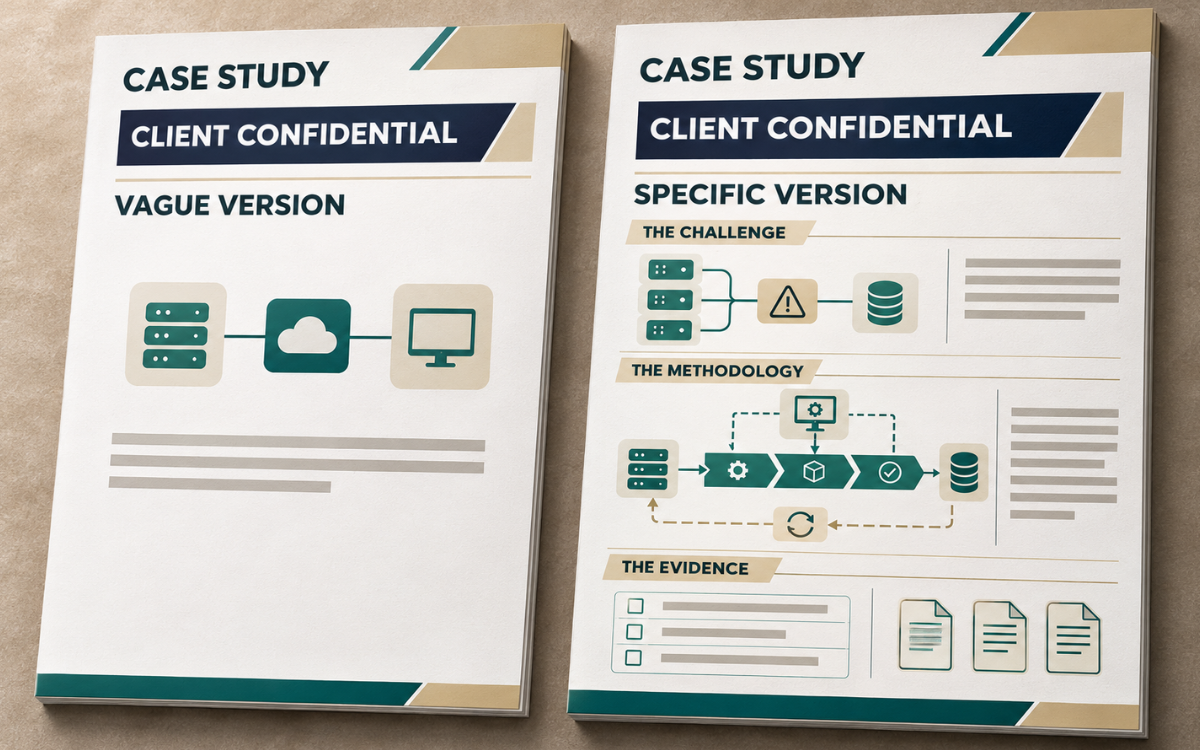
Forced to write anonymous case studies, many businesses default to vague language. They use phrases like “a leading financial institution” and strip out interesting details, fearing confidentiality breaches. The result is a generic, lifeless story that fails to persuade.
At WordBerries, we believe that content begins by listening to the business requirement and understanding the customer’s point of view. If the customer needs proof of your technical depth, a watered-down summary will simply not suffice.
Why specificity matters more than a logo
A nameless client does not mean a detail-free story. Readers care less about who you helped and more about the exact nature of the problem you solved.
Instead of relying on the brand name to carry the narrative, shift the focus to the friction. Describe the failing legacy systems, the exact regulatory hurdle the client could not clear, or the specific operational bottleneck costing them money. Specificity proves your expertise better than a namedropping exercise ever could.
For an illustrative rewrite, replace “improved IT infrastructure” with “planned a phased migration, tested rollback procedures and agreed acceptance checks with the operations team.” Use that wording only if it describes the real work and is approved for disclosure. Effective B2B case study writing hinges on this granular, relatable detail.
A framework for anonymous case studies
To keep your narrative sharp without violating privacy agreements, follow a structured approach to anonymisation. Here is how we separate the confidential from the compelling:
| Element | What to hide | What to highlight |
|---|---|---|
| The client | Exact name, location, and specific market share | Only approved context; check combinations of industry, scale and business model |
| The problem | Proprietary internal software names or exact financial losses | The category of the failing system and the operational impact |
| The solution | Custom code snippets or confidential strategic roadmaps | The methodology, the timeline, and the structural changes made |
| The results | Exact revenue figures or exact customer volumes | Verified, approved outcomes with baseline, timeframe and limitations |
This framework is a review checklist, not a guarantee of anonymity. Test whether the combined details could identify the client, even when each detail looks harmless alone. It allows you to build a credible narrative out of the project’s mechanics rather than the client’s prestige.
Balancing confidentiality with credibility
Even without a name, you can still build trust. Use a genuine client quote only with permission for both the wording and attribution.
A precise job title can identify the speaker; agree a broader description when needed. Never invent a quote to fill the gap.
You can also lean on your own subject-matter experts. Include a short perspective from the lead engineer or strategist who managed the project. Let them explain why the challenge was unusual and how they approached the solution, adding a human voice that demonstrates your team’s thinking process.
FAQ
How do you make an anonymous client sound credible?
Use approved context and explain the problem, decisions and constraints. Avoid assuming that an exact transaction count or company size is anonymous; combinations of details can reveal the client.
Can you use exact data in anonymous case studies?
Only if verified and permitted. Percentages and time savings can also be confidential or identifying. Agree what may be published, including baselines and measurement periods; never substitute invented or rounded outcomes.
Do anonymous stories perform well for Search Engine Optimisation (SEO)?
An anonymous story can address useful problem-led searches, but anonymity does not guarantee search performance. Choose language that reflects the actual buyer question and the evidence you can share.
Should we ask for client approval on anonymised content?
Always. Even with their name removed, clients should review the final draft to ensure they are comfortable with the details shared. This prevents accidental breaches of trust and maintains strong working relationships.
Mastering B2B case study writing requires you to treat the story as a demonstration of your problem-solving capability. If you need help turning complex, confidential projects into clear, persuasive narratives, explore our content services to shape an evidence-led story within the approved boundaries.