
We all have that one drawer at home. It is filled with old phone chargers you no longer own, mystery keys, and batteries that might be dead. You do not throw any of it away because, well, what if you need that specific micro-USB cable from 2014?
Your company website probably has the exact same problem. Only it is not hidden away in a kitchen drawer. It is sitting out in the open, fully indexed by search engines, and visible to every potential customer.
This is content debt. It is the slow, silent accumulation of outdated blogs, half-finished landing pages, and guides that reflect a product strategy you abandoned three years ago.
At first, it seems harmless. But over time, this digital clutter quietly erodes your brand authority, confuses your visitors, and tanks your search rankings.
How do you know if your site is just mature, or if it is actively drowning in debt? Here are four telltale signs that it is time for a digital spring clean.
1. Your sales team has stopped sharing your resources
It is the ultimate test of content utility. When a prospect asks a tricky question on a sales call, does your team proudly send over a link to your latest guide? Or do they spend twenty minutes drafting a custom email because the blog post on your site is hopelessly out of date?
If your front-line teams—sales, customer success, support—are actively avoiding your resource library, you have a content debt crisis.
Imagine a scaling regional logistics company. They launched a brilliant pillar page about customs clearance in 2022. Since then, regulations have changed twice. The sales team knows this, so they stop sharing the link. The page remains live and draws search traffic, but it now serves outdated advice to potential buyers.
When your own team loses faith in your content, your audience will not be far behind.
2. High-traffic pages are pulling in views but zero leads
It is a common scenario. You check your analytics and spot a blog post that is absolutely killing it. It gets thousands of visits every month. Yet, when you look at the conversion data, the lead count is a flat, depressing zero.
This disconnect usually occurs when a piece of content is left to decay.
The keywords might still be ranking, but the call to action is broken, the product screenshots look like an ancient operating system, or the offer is for a webinar that happened eighteen months ago.

When you ignore these high-performing legacy pages, you are leaving money on the table. A high-traffic page with outdated content is like a busy shop window displaying items that are no longer in stock. It frustrates the customer and wastes your hard-earned visibility.
3. You are accidentally competing with yourself in search results
When you have been publishing content for years without a central strategy, you inevitably start repeating yourself.
You write “How to scale a remote team” in 2020. Then a new writer joins and publishes “The ultimate guide to managing remote employees” in 2022. By 2024, you have four articles covering the exact same topic.
This is keyword cannibalisation. Instead of building one massive, authoritative resource, you have split your authority across multiple thin pages. Search engines get confused about which page to rank, and your readers get frustrated trying to find the definitive answer.
If a quick search of your site reveals three different articles answering the exact same query, your content is actively fighting against itself.
4. The ‘quick edit’ turns into a terrifying rabbit hole
You decide to update a single statistic on an old product page. Simple, right?
But as soon as you open the editor, you realise that changing that one statistic means updating three linked PDFs. It means changing the copy on two separate landing pages. It means fixing a broken template that someone custom-coded in 2021.
Suddenly, a five-minute task has eaten up your entire afternoon.
When your content ecosystem becomes so tangled that making a minor update feels like playing Jenga with your website code, you are carrying massive content debt. This complexity paralyses your team. They stop making updates because they are afraid of breaking something else, causing the site to decay even faster.
How to start paying down your website debt
You do not need to delete your entire website and start from scratch. Paying down content debt is about structured, steady triage.
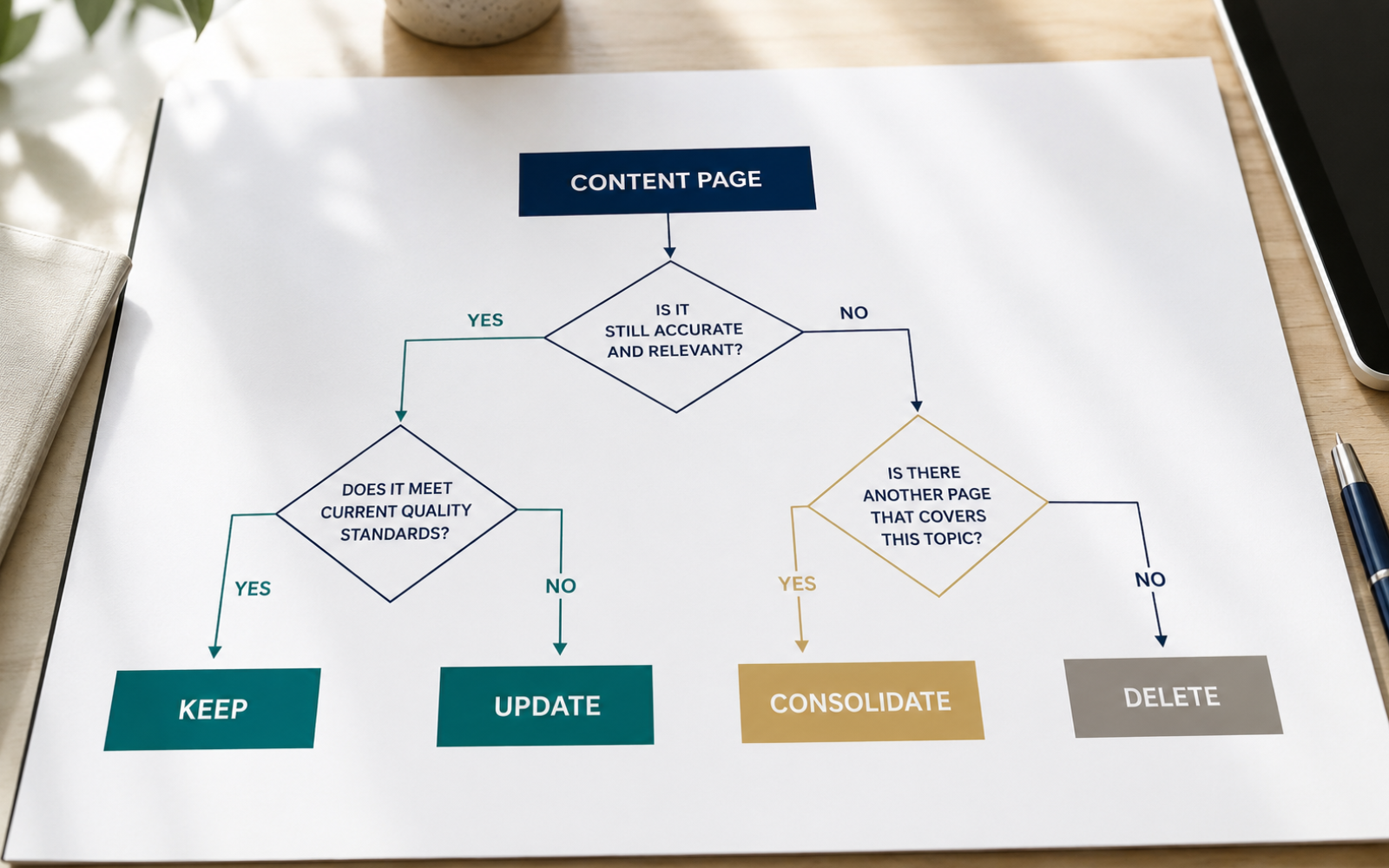
The best way to start is with a simple “Keep, Update, Delete” framework.
| Action | When to use it | What to do |
|---|---|---|
| Keep | High traffic, high conversions, accurate content. | Leave it alone, but schedule a quick check-in for next year. |
| Update | Good traffic, but outdated info, old visuals, or low conversions. | Refresh the stats, update the CTAs, and modernise the images. |
| Consolidate | Multiple thin pages covering the same topic. | Merge them into one comprehensive guide and set up 301 redirects. |
| Delete | Zero traffic, zero conversions, completely irrelevant to your current business. | Remove the page and redirect the URL to a relevant parent category. |
The compound interest of clean content
Getting rid of old content can feel counterintuitive. We have been trained to think that more is always better. But on the modern web, quality and clarity win every time.
When you pay down your content debt, your search visibility improves because search engines can crawl your site more efficiently. Your sales team gets a library of assets they can actually trust. Most importantly, your visitors get a smooth, cohesive experience that guides them naturally toward a decision.
Do not let your digital junk drawer dictate your brand’s first impression. Take a look at your oldest pages, find the quick wins, and start clearing the clutter. Your conversion rates will thank you.