

Let’s get one thing out of the way.
Most brands today aren’t struggling with creating content. They’re struggling with making content do something meaningful for the business.
Blogs are being published.
Posts are going live.
Videos are being edited.
And yet, leads are inconsistent, visibility is patchy, and leadership keeps circling back to the same uncomfortable question:
“Is this content actually working?”
If that sounds familiar, you’re not alone. Across start-ups, enterprises, and fast-scaling Indian brands, the problem isn’t effort. It’s alignment.
Here’s why most content fails to drive business results — and what high-performing brands do differently.
1. They create content without a clear business outcome
A lot of content still begins with vague intentions.
“We should post more.”
“We need blogs for SEO.”
“Let’s be active on LinkedIn.”
What’s missing is a sharper question:
What is this content supposed to change for the business?
High-performing brands start there. Before a single word is written, they know whether the content is meant to support demand generation, build trust, enable sales conversations, or improve long-term search visibility.
When content isn’t tied to a business outcome, it may look busy, but it rarely creates momentum.

2. They confuse activity with impact
Consistency often feels like progress. And while consistency matters, it’s not a strategy on its own.
Many brands fall into the trap of equating:
- More posts with more growth
- More blogs with better SEO
In reality, content impact depends far more on relevance and depth than volume.
High-performing brands invest in fewer, stronger pieces — content that answers real buyer questions, aligns with search intent, and gets reused intelligently across platforms instead of being forgotten after publishing.
They don’t chase output. They chase usefulness.

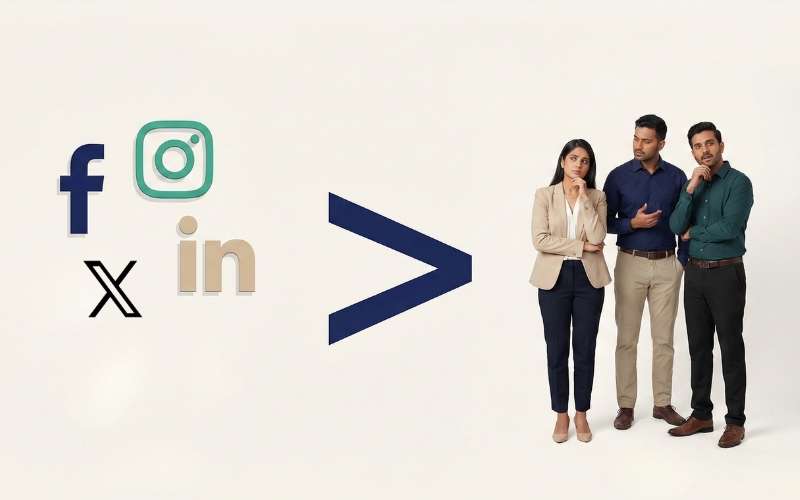
3. They optimise for platforms, not people
Algorithms change. Audiences remember.
A common reason content fails is that it’s created for platforms, not people. Hooks are prioritised over clarity. Keywords over meaning. Trends over brand voice.
High-performing brands take a different approach. They optimise for how people actually think, evaluate, and decide — especially in competitive Indian markets where audiences are informed, sceptical, and short on patience.
Their content sounds human. It acknowledges context. And it builds trust before asking for attention.
4. They treat content as a campaign, not a system
Most content exists in bursts.
- A few blogs during a launch
- A spike of posts around a campaign
- Then long gaps of silence
High-performing brands don’t operate this way. They build content systems, not content sprints.
This means clear ownership, defined workflows, repurposing strategies, and long-term visibility planning. Content becomes an asset that compounds over time — not a task that resets every month.
This shift alone often separates content that “looks good” from content that actually delivers results.

5. They don’t connect content to the buyer journey
Not every piece of content needs to sell. But every piece of content should serve a purpose.
Many brands publish without considering where the reader is in their decision-making journey.
High-performing brands are far more deliberate. They create educational content for discovery, thought leadership for credibility, and case-driven narratives for decision-making.
When content aligns with how buyers move — not how brands want to push — results follow more naturally.

6. They measure the wrong things (or nothing at all)
Likes feel good. Reach looks impressive. But neither guarantees business impact.
Content fails when success is judged only by vanity metrics or short-term spikes.
High-performing brands look deeper. They track search visibility, inbound quality, sales conversations influenced by content, and long-term engagement patterns.
They don’t expect content to convert instantly — but they do expect it to contribute meaningfully over time.

Final Thoughts
Most content doesn’t fail because it’s poorly written. It fails because it’s disconnected — from business goals, audience reality, and long-term strategy.
High-performing brands don’t create more content for the sake of activity. They create better-aligned content that knows why it exists, who it’s for, and what it’s meant to change.
At WordBerries, we work with start-ups, BFSI brands, and large Indian organisations that want content to do more than just look good — they want it to support real growth.
Because in 2026 and beyond, content isn’t about staying busy. It’s about staying relevant, trusted, and commercially effective.