
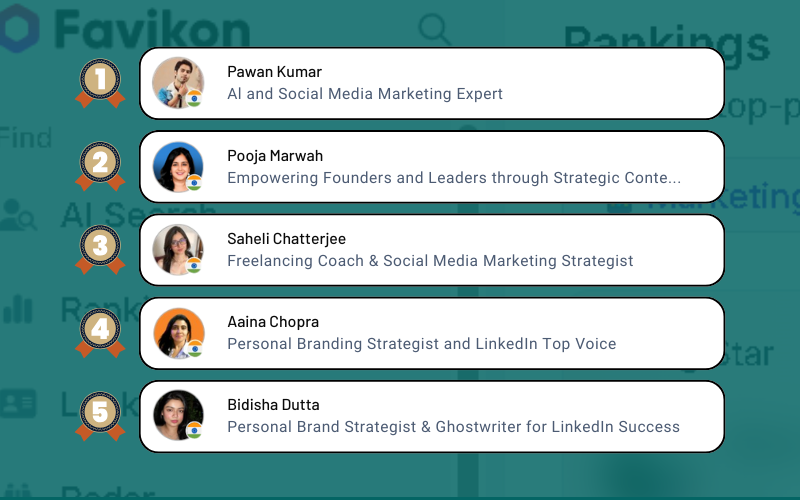
We recently ran a deep-dive using Favikon, analysing creators across platforms in the Marketing and Sales industry — specifically within content marketing and copywriting.
Five names consistently surfaced at the top.
Not because they post the most.
Not because they chase trends.
But because their authority travels with them — across platforms, formats, and algorithms.
Instead of stopping at rankings, we studied how they built that authority. What changed as they grew. What they did before the audience showed up. And what stayed consistent as everything else evolved.
Here’s what stood out.
1. They evolved their service — from execution to transformation
Most of them started with execution. Writing. Posting. Creating.
The real shift happened when they stopped selling what they do and started selling what changes. Moving from “I write copy” to “I help founders sign high-paying clients” changes the entire conversation.
Strategy replaces labour. Outcomes replace deliverables.
That single shift determines who reaches out — and what they’re willing to pay.
2. They moved upmarket by narrowing their audience
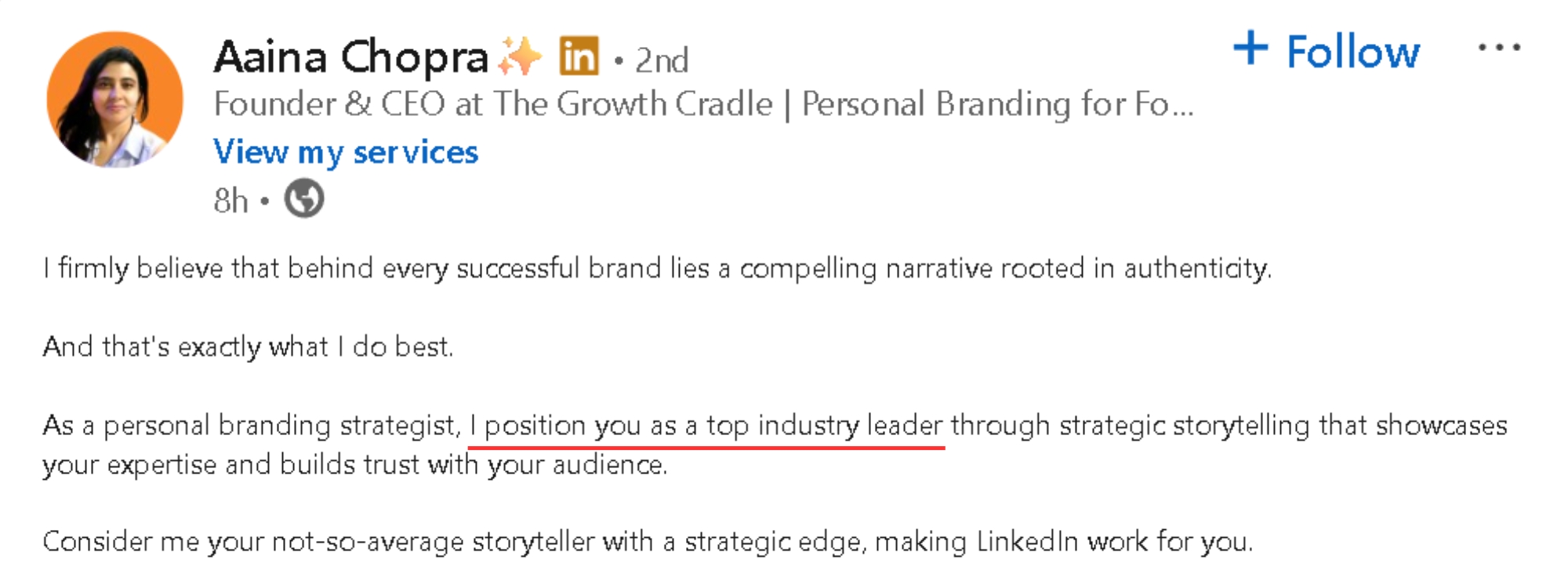
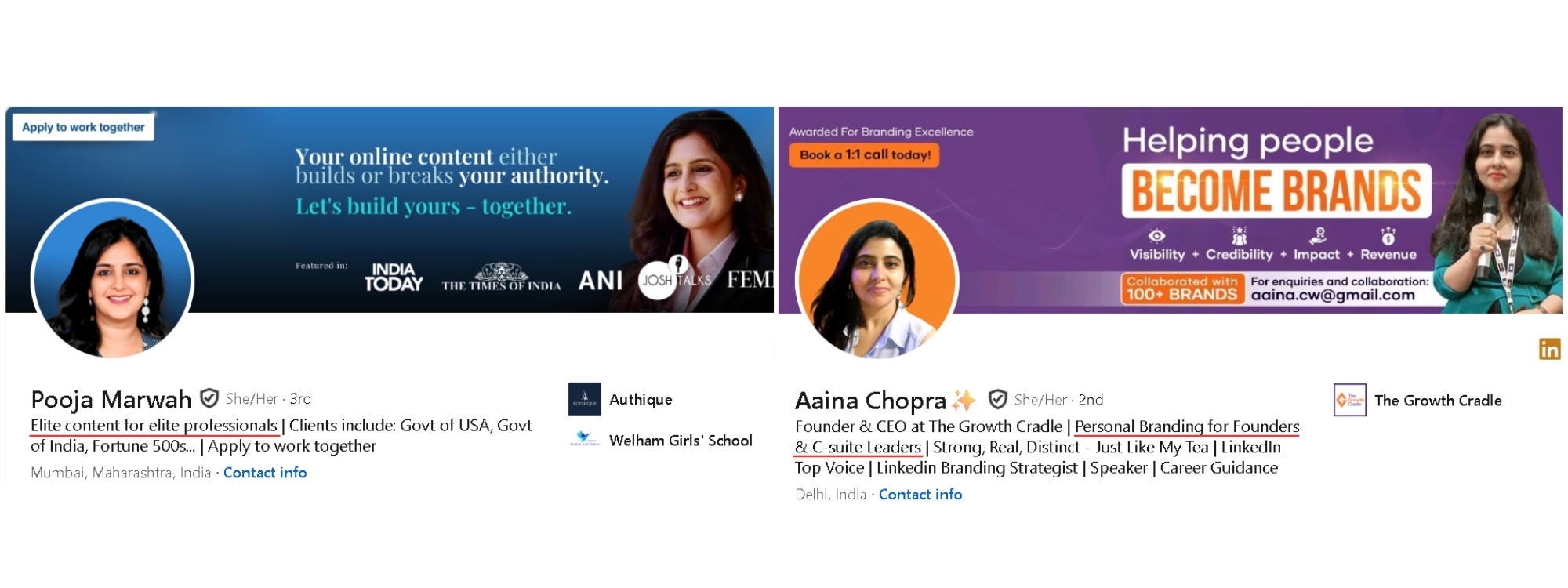
They didn’t try to appeal to everyone. Instead, they positioned themselves for high-value segments — founders, C-suite leaders, senior decision-makers.
Over time, freelance work turned into consulting. Consulting turned into education. Education turned into selective, high-trust engagements.
Each transition quietly filtered out low-intent audiences and attracted fewer, but far more meaningful opportunities.
3. They used revenue transparency as credibility, not ego
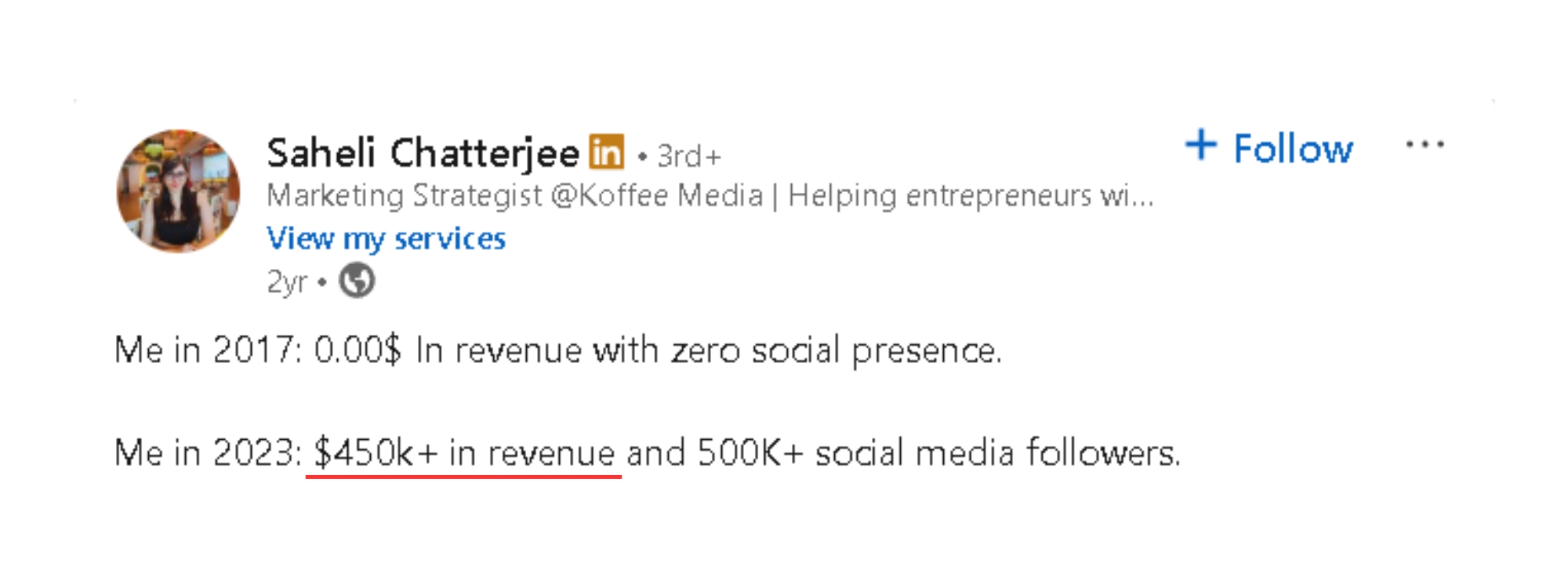
Income milestones, client wins, and scale weren’t hidden.
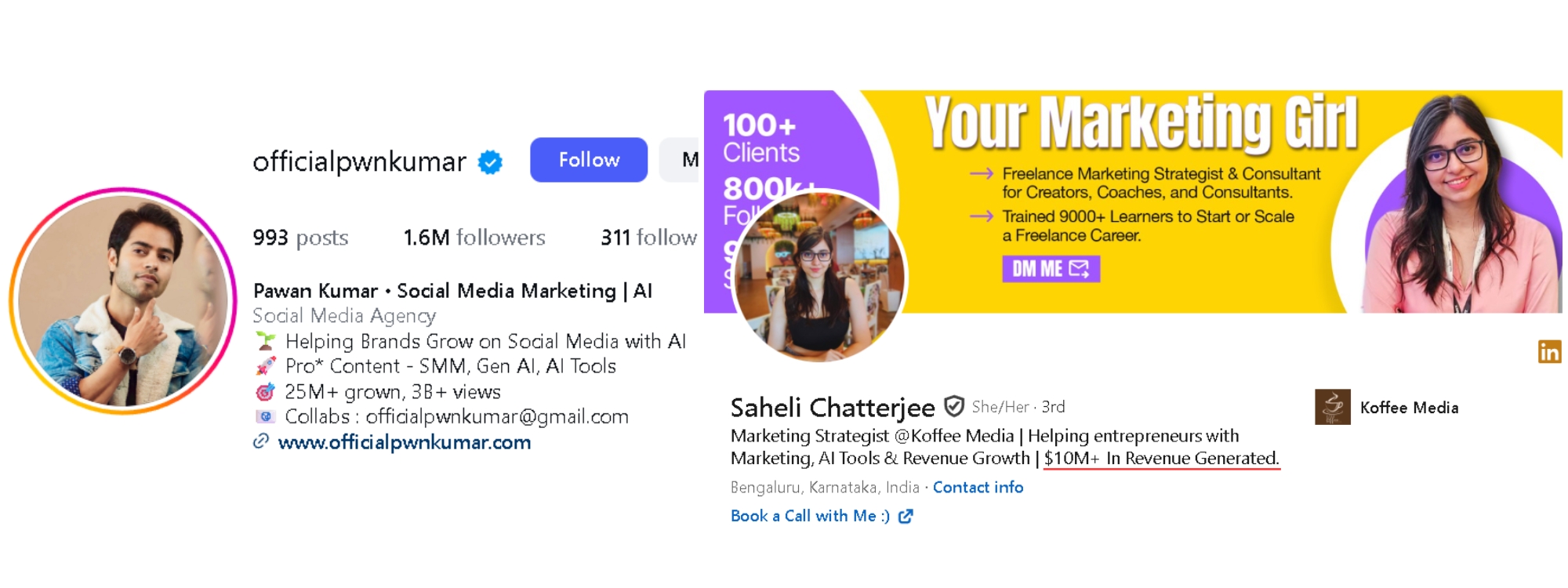
Numbers appeared in bios and posts — not as flexes, but as friction-reducers. When someone sees “₹10Cr+ generated” or “500+ founders trained,” credibility is established instantly.
No pitch required. No explanation needed.
It’s social proof that survives algorithm changes.
4. They taught publicly to compound authority
Courses, cohorts, and academies weren’t side projects. They were leverage.
Teaching allowed them to reach thousands without trading time, while still maintaining premium done-for-you or advisory work.
One reputation supported two revenue streams. Education scaled trust. Services monetised depth.
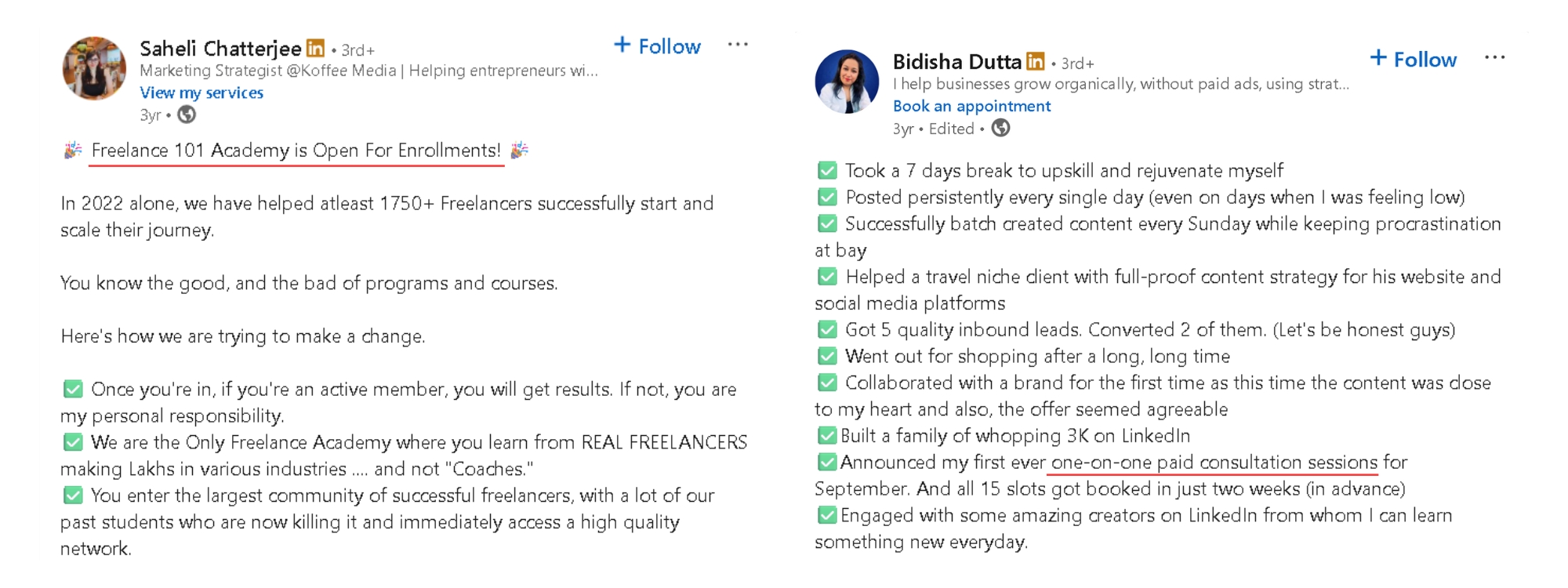
5. They built cross-platform presence — with one anchor
Most chose one primary platform as their authority base. Other platforms extended reach, not identity.
The insight stayed the same. The framing evolved.
A LinkedIn post became an Instagram carousel. A carousel became a newsletter deep-dive. A newsletter became a workshop talking point.
They didn’t reinvent ideas — they repackaged clarity.
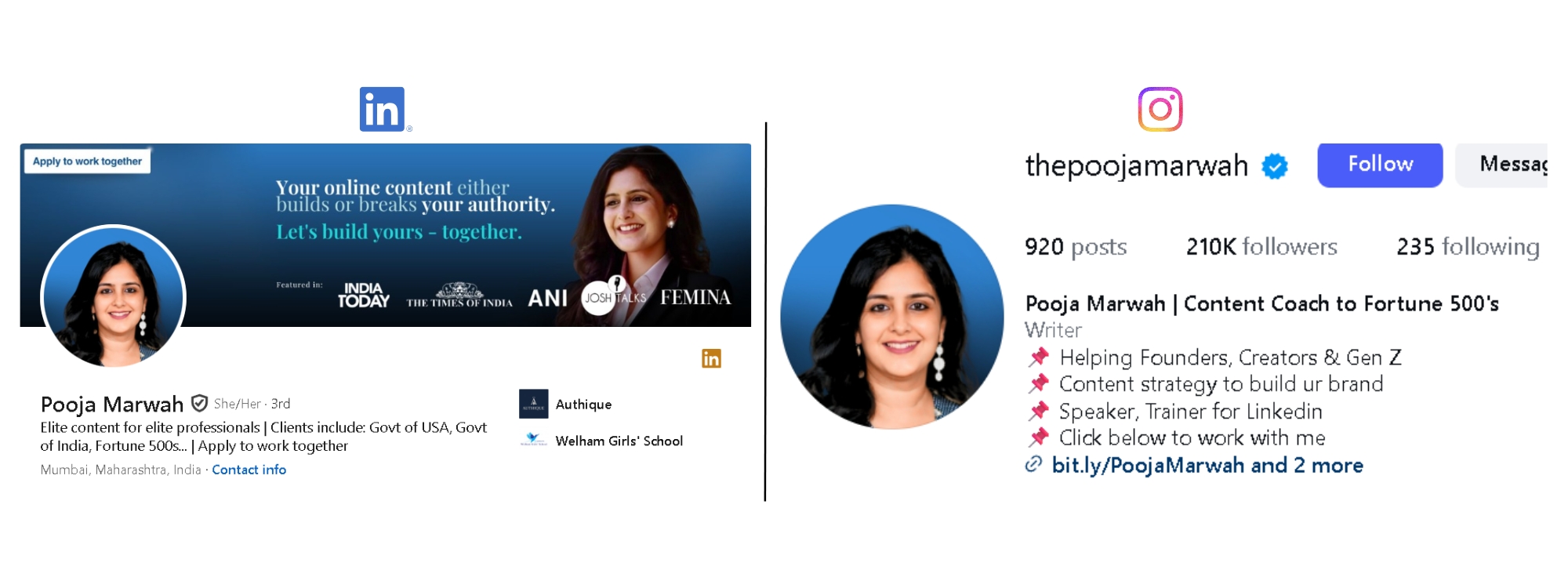
6. They used personal stories strategically
Their origin stories weren’t motivational fillers.
Every personal anecdote existed to position them as someone who understands the current struggle of their audience.
The story wasn’t about where they started — it was proof that they’ve already walked the path their audience is on.
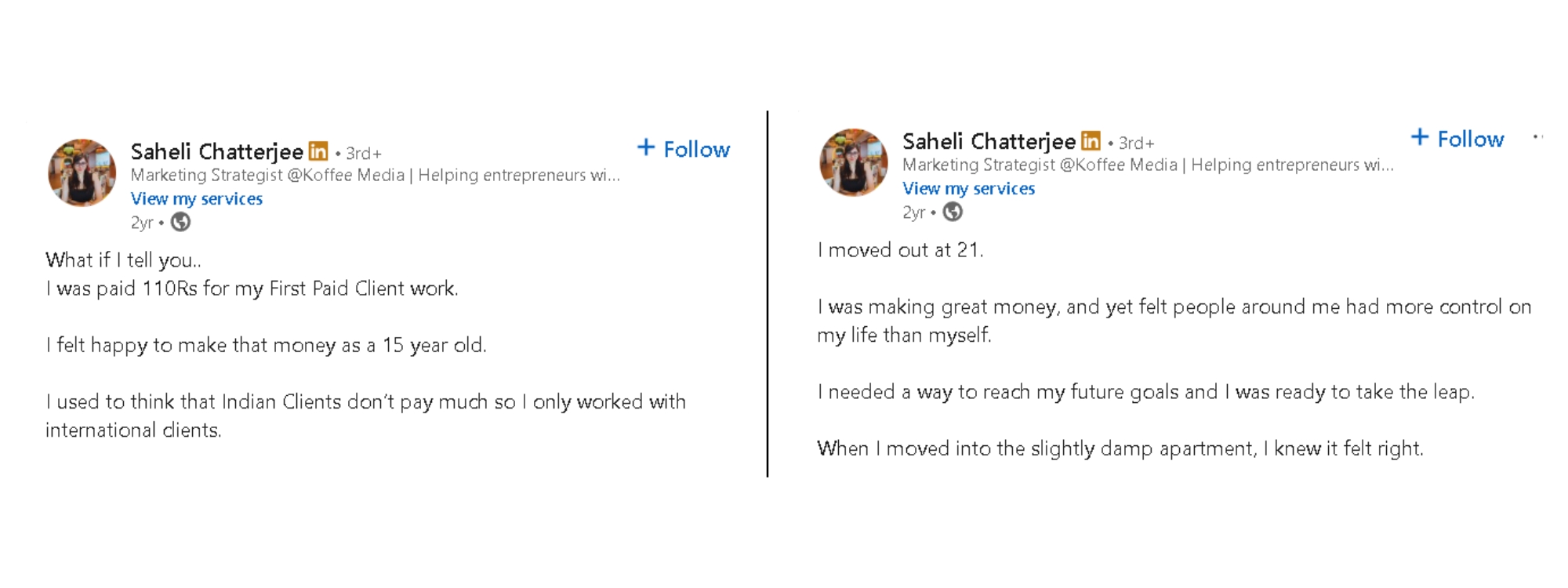
7. They gave away premium value at scale
Their free content solved real problems. Expensive ones.
Frameworks weren’t gated. Strategies weren’t teased. That generosity built disproportionate trust.
When someone gives away ₹1,00,000-level insight for free, hiring them feels safer than choosing a cheaper alternative.
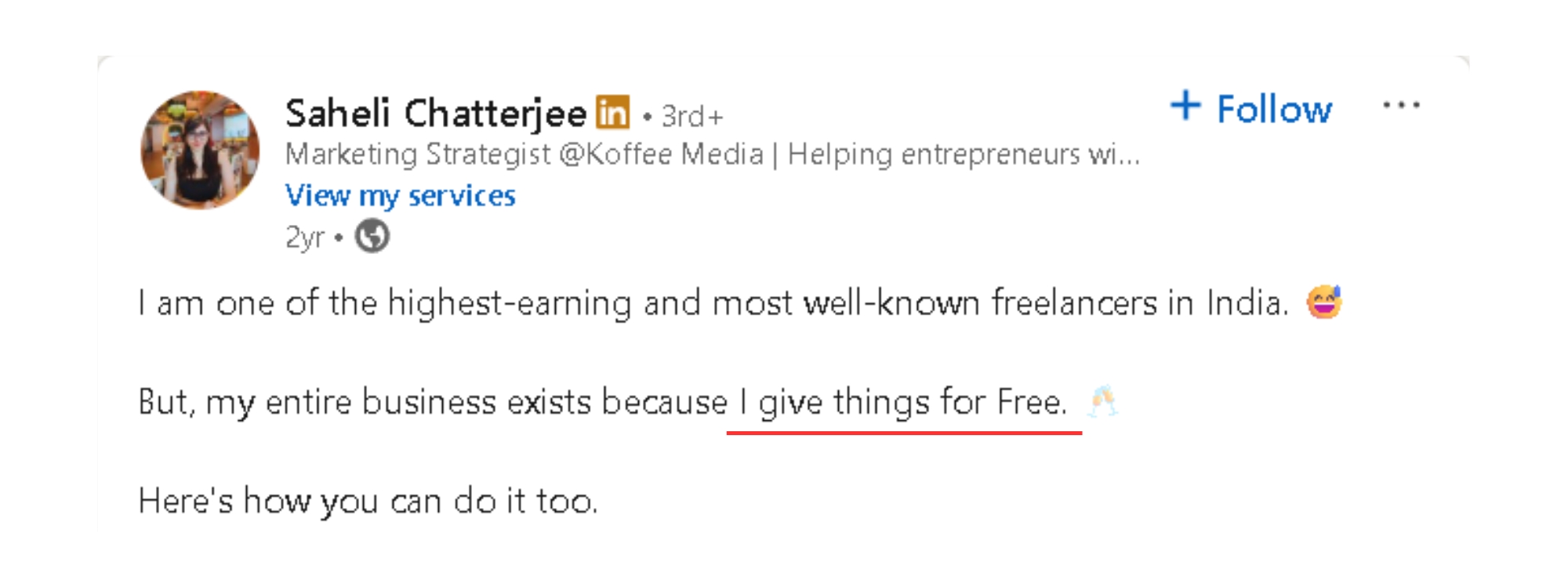
8. They turned client success into content
Testimonials weren’t hidden on a website.
Client transformations, specific results, and recognisable names appeared naturally across content.
Proof replaced persuasion. Expertise didn’t need to be announced — it was visible.
9. They used pricing as positioning
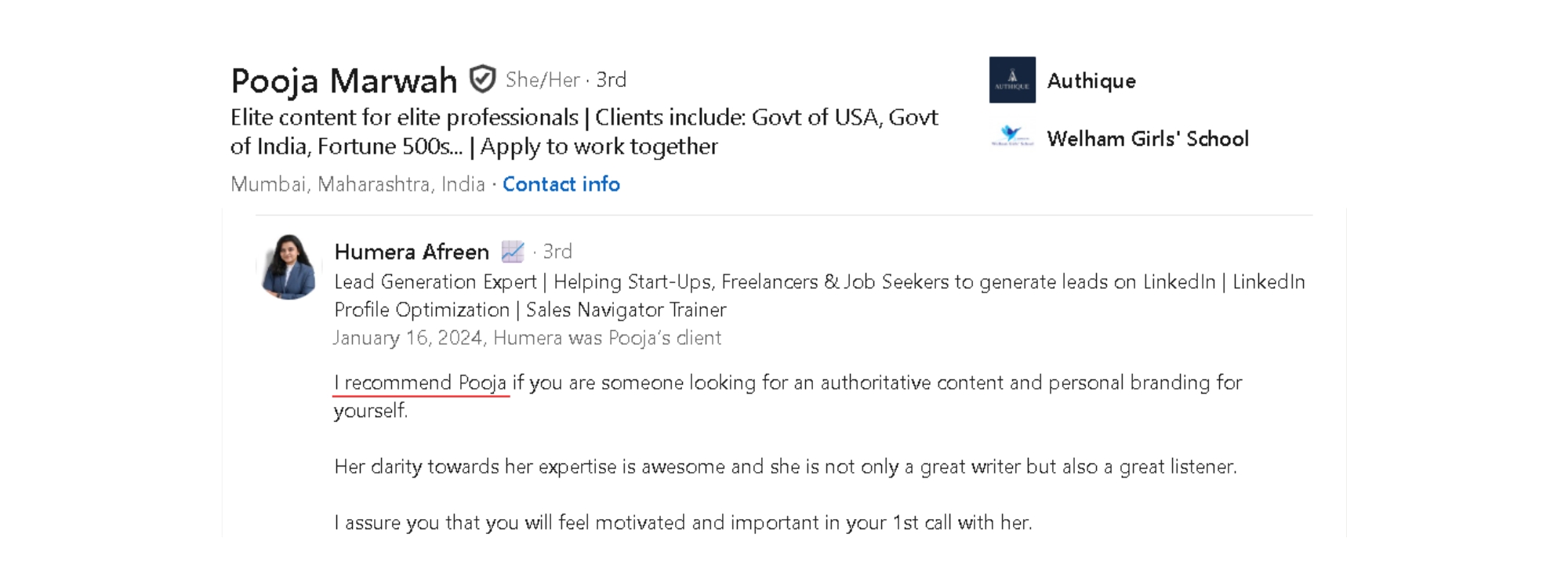
Premium pricing wasn’t revealed at the end. It showed up early.
Mentions of “₹3 lakh projects” or “six-figure investments” acted as filters.
Price became proof of value, not a barrier. Low-intent leads opted out on their own.
10. They treated silence as a strategy
They didn’t post daily. They posted intentionally.
A week of silence followed by a strong insight or case study created anticipation.
In a noisy ecosystem, restraint became differentiation.
The common thread across all five?
They didn’t chase attention.
They built authority.
And once authority is established, platforms stop being gatekeepers — they become amplifiers.