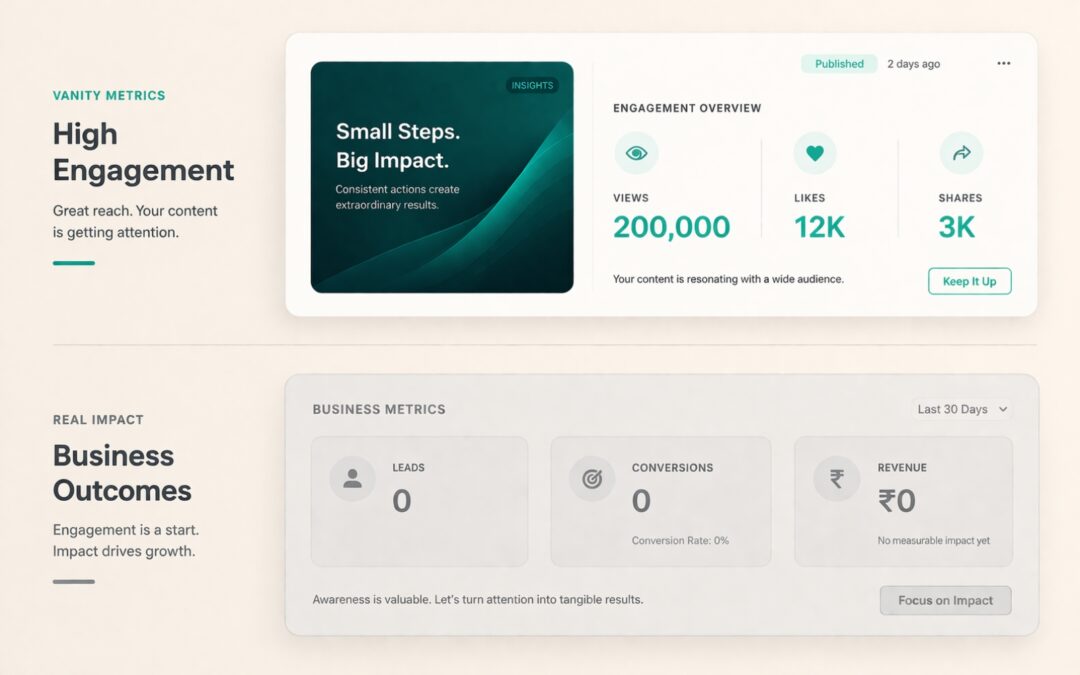
Picture this: a piece of content explodes. Views skyrocket. Shares pour in. The team celebrates. Then, three days later, it’s a ghost town. The spike fizzles, the audience vanishes, and the business impact? Practically zero. If that pattern feels familiar, you’re not chasing a fluke—you’re chasing a myth. The ‘viral’ piece isn’t a strategy; it’s a lottery ticket. And while everyone dreams of winning it, the brands that actually win in the long run optimise for something far less flashy but infinitely more valuable.
Here’s why the viral fantasy is a trap, and what to build instead.
Why the ‘viral’ piece is a strategy trap
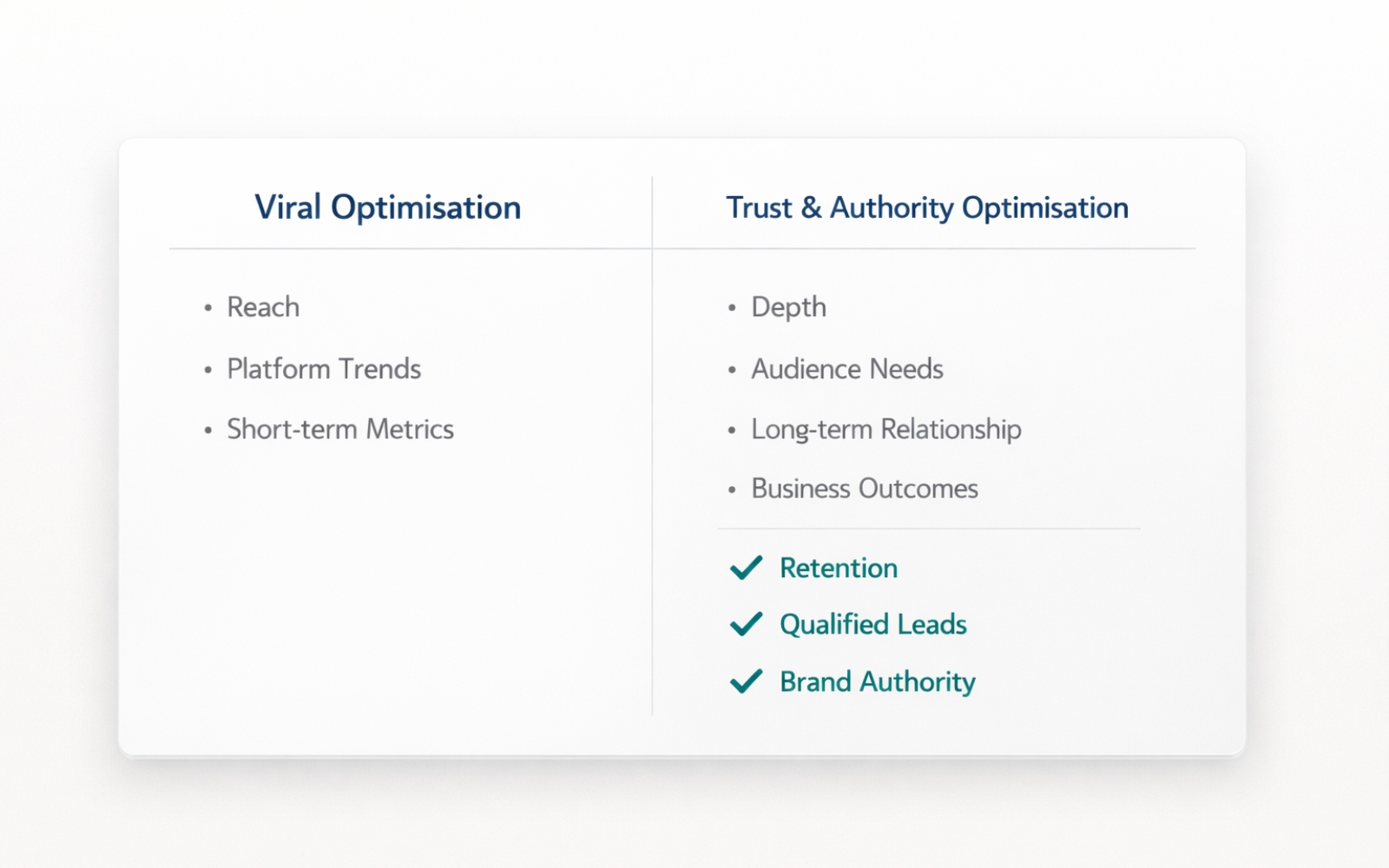
Let’s be clear: virality is an algorithmic event, not a marketing outcome. It’s often driven by platform mechanics, timing, or sheer luck—not by a deliberate connection to your audience’s deepest needs or your business goals. Optimising for virality means optimising for a fleeting moment of attention, not for lasting trust or conversion.
The illusion of reach without retention
A viral hit can bring thousands of new eyes to your brand, but if those eyes don’t stick, it’s just noise. Think of a trending audio on a short-video platform. A brand jumps on it, gets 200,000 views, but the content has little to do with their actual service. The audience laughs, scrolls on, and forgets. You’ve reached many, but retained none. High-performing brands know reach without retention is an expensive vanity metric—it burns budget and morale without moving the needle on awareness, consideration, or sales.
The volatility of platform-dependent success
Building a strategy on virality is like building a house on sand. Platforms change algorithms without warning. What trends today is dead tomorrow. A brand that invests heavily in chasing one viral format risks losing its entire audience when the platform shifts. The goal isn’t to game the algorithm for one week of fame; it’s to build an asset—your brand authority—that lives independently of any single platform.
Optimise for depth, not just reach
Instead of asking, “How do we make this go viral?” ask, “How do we make this useful?” Depth beats breadth every time when it comes to sustainable growth.
Create content that answers, not just attracts
The most powerful content doesn’t just grab attention—it holds it by solving a real problem. A detailed guide on “Navigating GST compliance for Indian SMEs” won’t break the internet, but it will attract exactly the right audience, generate qualified leads for months, and position your brand as a trusted partner. That’s compound interest in content form. Focus on creating definitive resources, nuanced explainers, and actionable frameworks that people return to and reference.
Build topic clusters, not isolated hits
This is where SEO and authority truly merge. Instead of publishing random viral attempts, build interconnected content around a core theme. For a brand offering financial planning tools, a cluster might look like:
- Pillar: “Financial Planning for Freelancers in India”
- Clusters: “Tax-saving strategies for gig workers,” “Retirement planning without a fixed salary,” “Cash flow management for irregular income”
Each piece links to the others, sending clear signals to search engines and, more importantly, providing a comprehensive learning path for your audience. This system builds authority steadily, not sporadically.
Optimise for authority, not just awareness
Awareness is a one-night stand. Authority is a long-term relationship. Virality might make you known; authority makes you the go-to.
Move from “what we do” to “why we see differently”
Generic advice gets ignored. A distinct point of view gets remembered. Instead of creating content that simply states your services, articulate a unique perspective on your industry’s challenges. A SaaS founder in Bangalore might write not about “project management tools” but about “Why Indian remote teams need asynchronous-first workflows, not real-time meetings.” That’s not just content—it’s a stance. It filters for the right clients and repels the wrong ones.
Use revenue transparency as a credibility signal
As seen with top independent creators, sharing outcomes—not as a brag, but as proof—builds instant credibility. “We helped 50+ Indian e-commerce brands reduce customer acquisition cost by 30%” is more powerful than 10 viral reels. It demonstrates competence, results, and relevance. Let your results speak for your brand’s authority.
Optimise for trust, not just traffic
Traffic that doesn’t trust doesn’t convert. Trust is the true north star for content that drives business results.
Trust is built through consistency and context
Trust isn’t created in a single viral moment. It’s earned over time through consistent, context-aware communication. This means:
- Aligning your content with where your audience is in their buyer’s journey.
- Speaking their language, using localised examples and cultural nuances.
- Admitting limitations and showing your process, not just polished outcomes.
A series of thoughtful LinkedIn posts from a founder in Pune sharing genuine scaling challenges will build more qualified interest than one viral meme that has zero connection to their expertise.
Trust reduces friction in the sales process
When a prospect has already consumed your deep-dive guides, case studies, and philosophical takes, the sales conversation changes. They come informed, pre-sold on your perspective, and ready to engage. Content that builds trust acts as a pre-sales enablement tool, shortening cycles and increasing close rates. Virality does none of this.
Build a sustainable system, not a viral hope
Finally, shift your mindset from “hope this hits” to “build a system that compounds.”
Invest in evergreen assets
Evergreen content—foundational guides, core methodology breakdowns, timeless industry analyses—keeps working for you year after year. It requires upfront effort but delivers perpetual ROI. Allocate a fixed percentage of your content budget to creating and updating these assets. They are your digital real estate that appreciates in value.
Measure the right metrics
Ditch the “views and shares” dashboard for metrics that reflect true progress:
- Search visibility growth for key topic clusters.
- Time on page and return visitor rate for engagement depth.
- Lead quality from content sources.
- Content-assisted conversions (how often content touched a deal before closure).
- Branded search volume growth (are people searching for you?).
These indicate authority and trust building, not just momentary attention.
The 2026 mindset: value velocity
In a noisy digital landscape, speed matters—but only if it’s the speed of delivering value. The goal isn’t to publish faster; it’s to ensure every piece you publish moves a relevant person closer to a decision in your favour. That’s value velocity. It’s sustainable, predictable, and owned by you, not handed to you by an algorithm.
The final word
Chasing virality is like trying to catch lightning in a bottle. It’s exciting when it happens, but you can’t build a business on random strikes. The brands that will win in 2026 and beyond are those that quietly, consistently optimise for depth, authority, and trust. They build systems that compound. They create content that serves, not just stuns. They understand that in a world obsessed with the next big thing, the truly big thing is the steady, credible, valuable presence you build over time.
Stop praying for a viral miracle. Start building an un-ignorable brand. That’s the only strategy that never goes out of style.