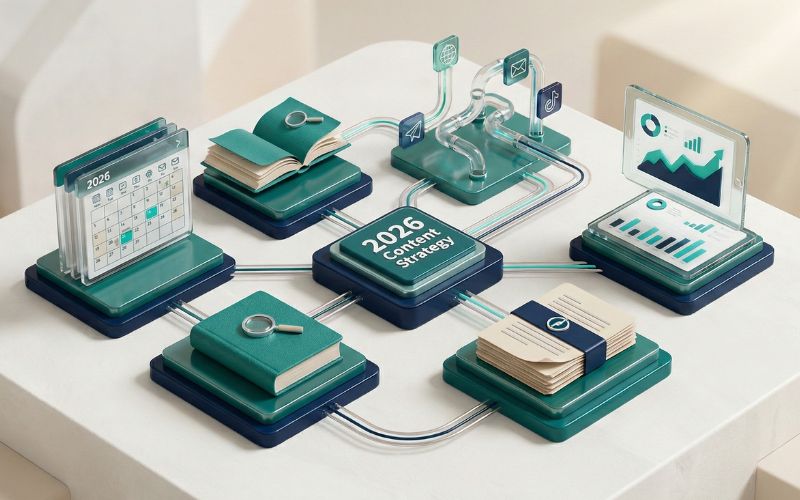
2025 is almost over — and if this year proved anything, it’s that content isn’t slowing down.
New platforms showed up. Algorithms changed. AI tools exploded. Attention spans got shorter, competition got louder, and customers became even more selective.
And yet… one thing stayed constant:
Brands that communicated with clarity and consistency won.
As we step into 2026, the game isn’t about chasing “what’s trending”. It’s about building a content system that actually moves your business — whether you’re a start-up founder in a city like Mumbai, an SME owner in Pune, a BFSI brand in Delhi, or a tech company scaling pan-India.
Here’s your 2026-ready content marketing playbook to stay relevant, visible, and trusted.
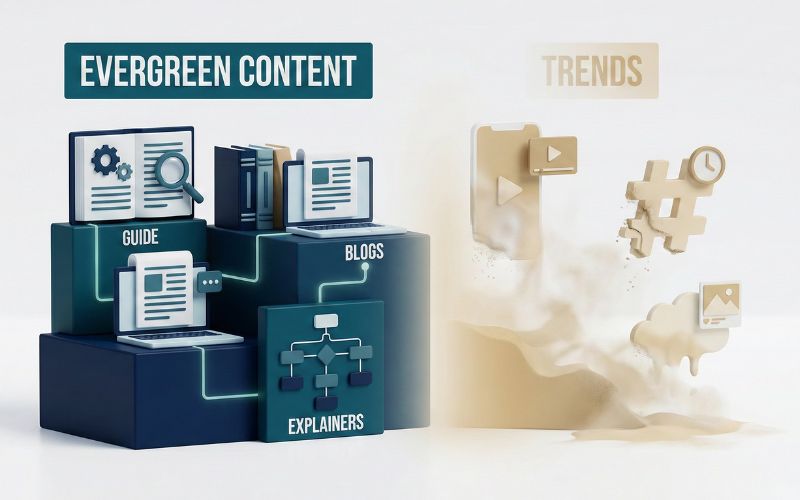
1. Double down on value-led, not trend-led, content
Trends come and go faster than most brands can keep up.
One day, everyone’s doing carousels. Next week, it’s AI-generated reels. Next month, it’s “no-edit” videos.
But what stays constant?
Value.
In 2026, Indian audiences will follow, trust, and buy from brands that consistently solve real problems through content:
- Simple explainers
- Step-by-step guides
- Hyper-relevant FAQs
- Industry insights
- Real stories
- Practical how-tos
If you want long-term recall, build a content system — not a content reaction habit.
2. Build strong topic clusters to dominate search visibility
Google’s entire search ecosystem in India is shifting towards authority.
It’s no longer enough to publish blogs — you have to publish connected blogs.
Enter topic clusters — the 2026 SEO essential.
Instead of random blogs, Indian brands need structured clusters like:
- “SME content strategy India” → related guides
- “BFSI customer trust” → interconnected explainers
- “Real estate marketing India” → localised content series
- “Tech start-up storytelling” → playbooks and examples
- “Digital marketing in Mumbai” → multiple subtopics
Clusters = authority.
Authority = search visibility.
Search visibility = leads.
3. Use AI to scale content — not replace your brand voice
2025 was the year AI went from “wow” to “okay, this is useful”.
2026 will be the year brands figure out how to actually use it without losing authenticity.
Here’s the new reality:
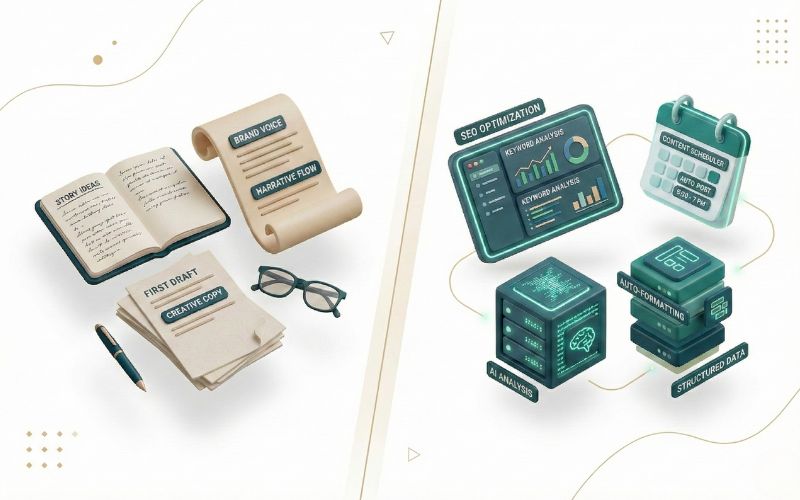
AI helps you work faster, but it cannot replace your voice.
The smart approach in 2026 is:
- Use AI for research
- Use AI for structuring
- Use AI for drafting options
- Use humans for depth, tone, and authenticity
- Use editors for polishing
- Use strategy to align everything
AI helps you scale.
Your voice helps you connect.
The brands that win will blend both.
4. Invest in hyperlocal content — because India is local, not generic
India doesn’t behave like one audience.
It behaves like hundreds of micro-audiences.
2026 will be the year hyperlocal content becomes non-negotiable.
Brands need to create content that speaks specifically to:
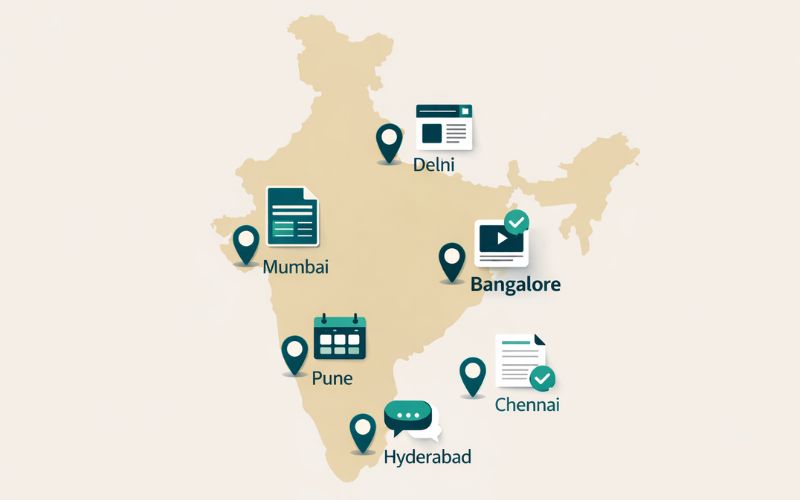
- Cities (Mumbai, Pune, Bangalore)
- Regions
- Local buying patterns
- Local industries
- Local problems
- Local culture
- Local search terms
Hyperlocal content builds trust faster than national content — especially in competitive markets.
5. Make storytelling part of every communication — not just campaigns
2026 audiences expect authenticity — whether it’s a social post or an investor update.
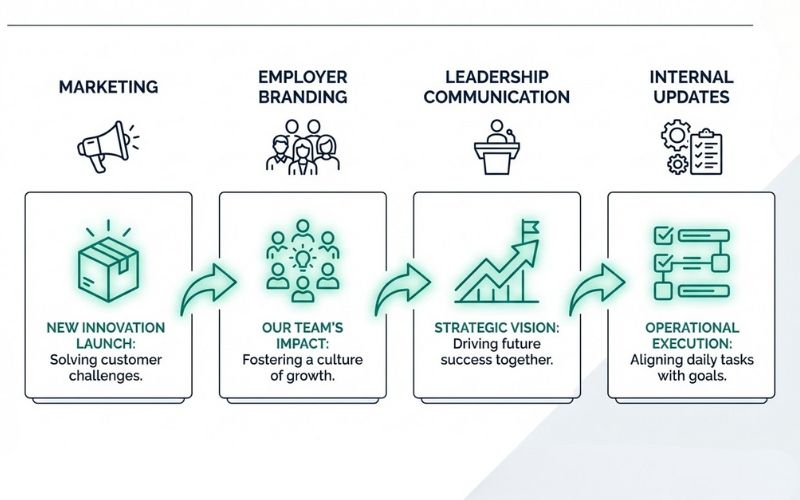
Brands need to tell stories everywhere:
- HR communication
- Corporate presentations
- Brand campaigns
- Customer case studies
- Leadership messages
- Product explainers
- Recruitment marketing
Storytelling is no longer an “angle”.
It’s infrastructure.
If your communication feels robotic, generic, or overly formal, you’ll lose attention instantly.
The best content agencies in Mumbai are already helping brands build storytelling systems — not just one-off brand films.
6. Build a consistent multi-platform identity (not copy-paste content)
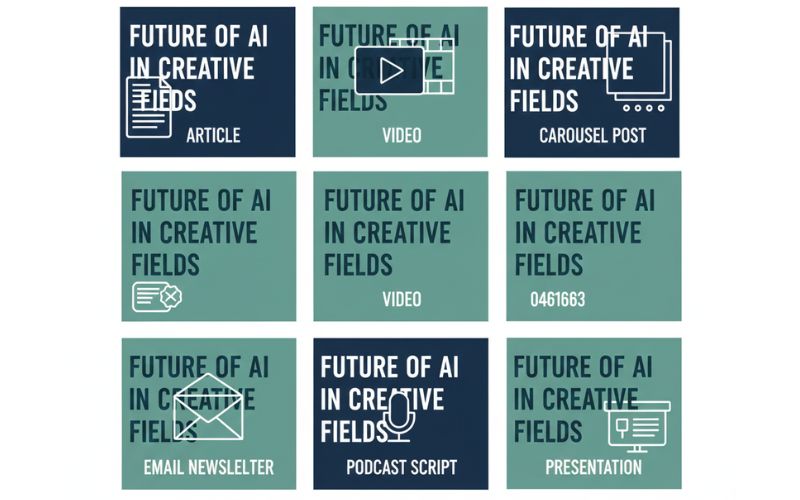
In 2026, brands will need a modular content system — one idea expressed differently across platforms:
- LinkedIn → thought leadership
- Instagram → visual storytelling
- Website → search-focused clarity
- YouTube → deeper narratives
- Email → personalised communication
- WhatsApp → quick touchpoints
The days of “same post everywhere” are over.
Every platform has its own behaviour — and brands that understand these nuances will stand out instantly.
Content isn’t about quantity in 2026.
It’s about context.
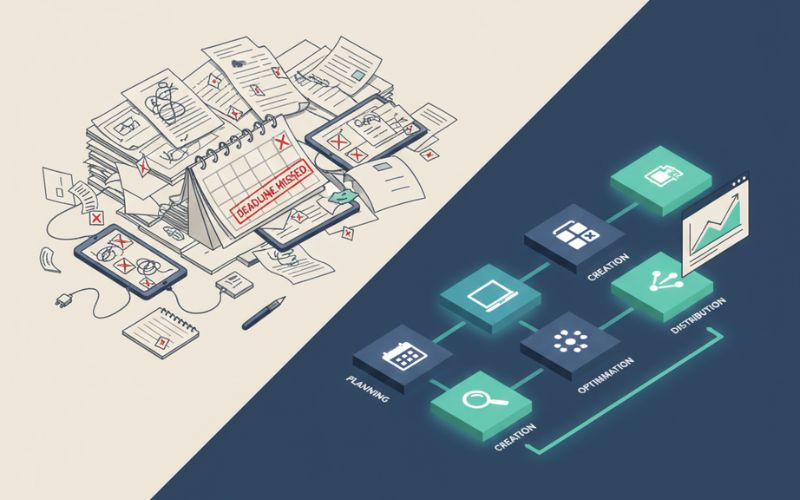
7. Build content systems, not content chaos
The biggest difference between brands that grow and those that don’t in 2026?
Systems.
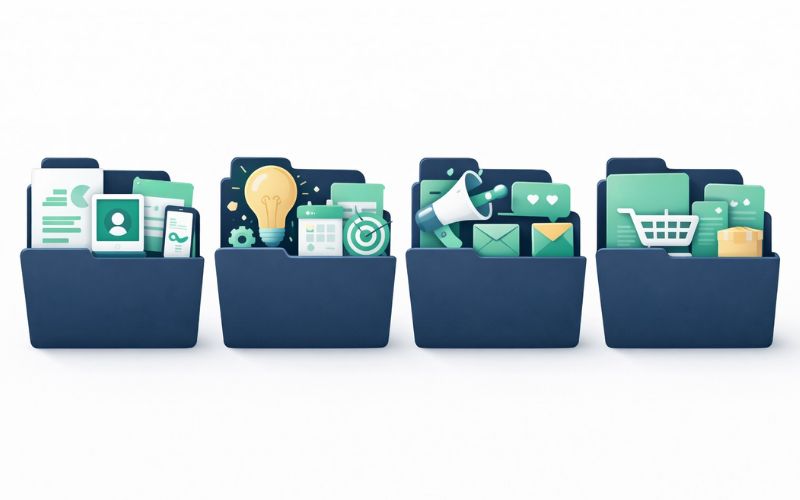
A content system includes:
- A calendar
- A feedback loop
- Keyword clusters
- Asset libraries
- Style guides
- Internal approval flow
- Multi-platform distribution plan
Without systems, content feels last-minute.
With systems, content becomes momentum.
This is exactly why so many Indian brands are turning to content writing agencies — not for “blogs,” but for structure.
Final thoughts: 2026 belongs to brands with clarity, consistency, and character
The coming year will bring new trends, new platforms, and new challenges.
But the core of content marketing remains the same:
If your communication is clear, helpful, and consistent — you win.
If your brand sounds human, not robotic — you connect.
If your content system runs smoothly — you scale.
At WordBerries, this is exactly what we help brands build — a future-ready content engine that’s strategic, local, human, and built for long-term momentum.
If you’re ready to step into 2026 with sharper communication and a stronger content foundation, we’d love to help you build your playbook.