
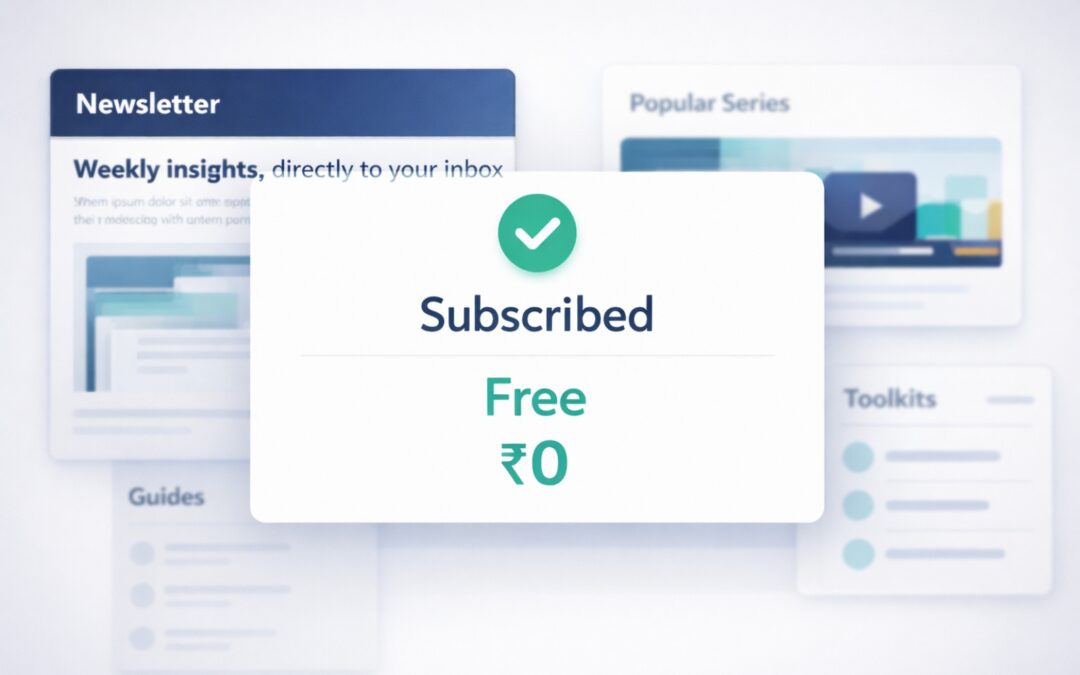
Most blogs are built like a newsletter. A new post pops up, you share it, and hope someone reads it before the next one arrives. There’s no continuity. No built-in reason to return. It’s a series of one-off gifts, not an ongoing relationship.
But what if you treated your blog like a product? Not a physical thing you sell, but a living, evolving service that people choose to engage with regularly—even for free. That shift changes everything. It moves you from chasing viral hits to building habitual value. From publishing to retaining. From a content calendar to a content system.
Here’s how to start thinking like a product manager for your blog, and why that mindset is the hidden lever for sustainable growth.
It’s not about the paywall—it’s about the habit
When we say “subscription,” the mind jumps to paid newsletters or members-only sites. But a subscription is really a promise of ongoing value. Your free blog can be that promise too.
Think about the apps you use daily. You didn’t pay for all of them, but you keep coming back because they solve a recurring problem, fit into a routine, and feel like they’re “yours.” Your blog can create that same dependency—not through gating, but through consistent, cumulative usefulness.
A founder who reads your weekly “SME finance” series starts to anticipate it. A marketing manager who follows your monthly “campaign teardowns” knows exactly when to look. That’s subscription behaviour, even if the price is zero. You’re not just publishing content; you’re building a habit.
Design for retention, not just reach
Traditional blog metrics focus on pageviews, time on page, and bounce rate. Product thinking asks different questions:
- How many readers return within a week?
- Which series do people consume in order?
- What triggers a reader to subscribe to your email list after reading three posts?
These are retention metrics. They tell you if your blog is becoming a destination, not just a stopover.
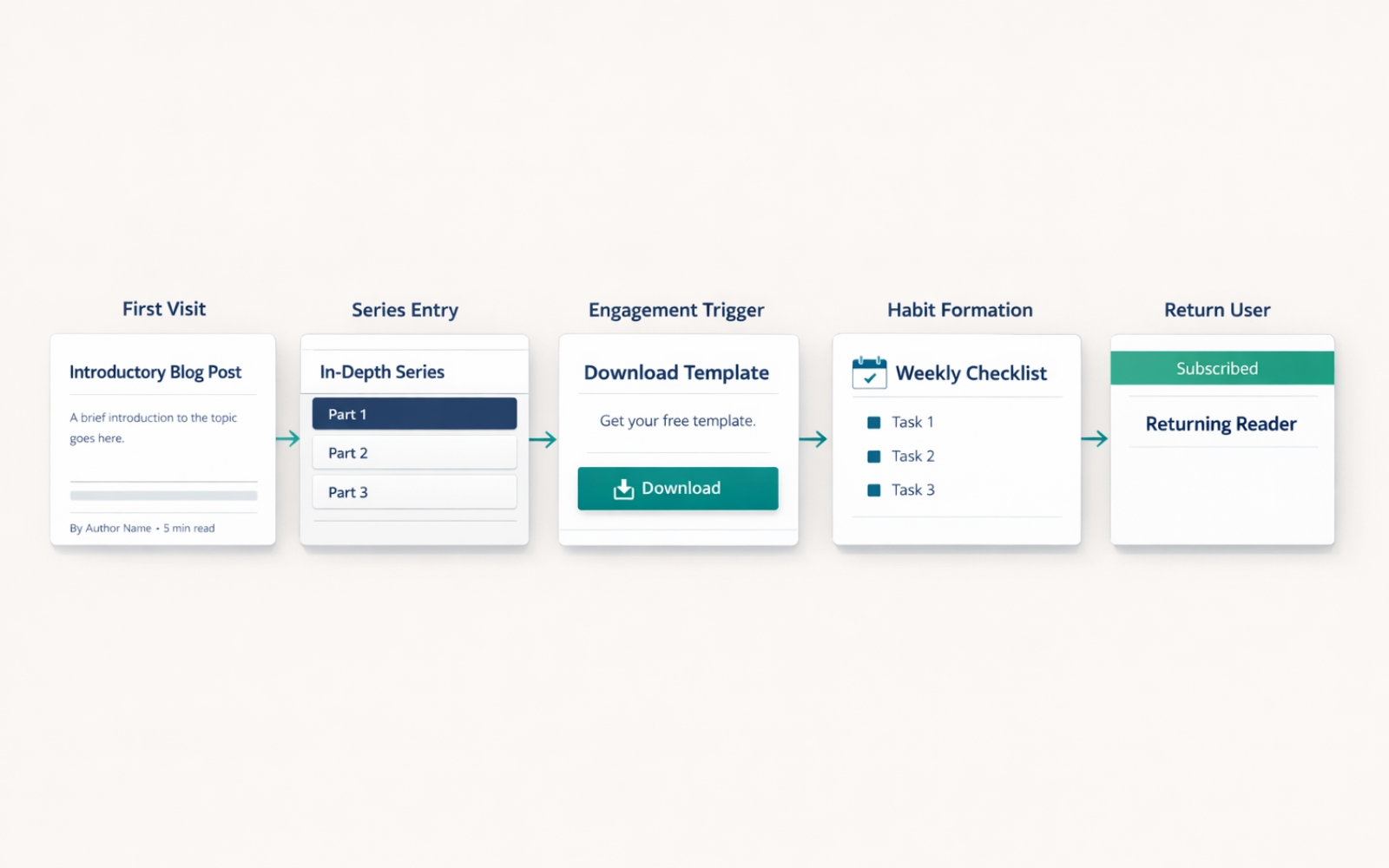
For example, an edtech brand might publish standalone exam tips. But if they design a 10-part “study planning” series—each post building on the last, with a clear progression—readers have a reason to come back. They’re not just looking for one answer; they’re investing in a system. That’s product thinking: you’re designing a journey, not a single page.
Tier your value like a product roadmap
A product doesn’t launch with all features at once. It starts with a core, then adds layers based on user behaviour. Your blog can do the same.
- Tier 1: The accessible core This is your evergreen, foundational content. The “what is” guides, the “how to start” playbooks. It’s search-optimised and answers the most common questions. It works for new visitors and has long-term SEO value.
- Tier 2: The recurring series These are your scheduled, thematically linked posts—weekly, bi-weekly, or monthly. They create anticipation and habit. Think: “Monday market insights,” “Friday founder interviews,” or “monthly regulatory updates.” The format and timing become a ritual for your audience.
- Tier 3: The interactive layer This is where you turn passive reading into active engagement. Think: downloadable worksheets that accompany a post, a community comment thread where readers share their applications, or a quarterly “progress tracker” that references past content. It deepens the relationship and gives people a reason to return beyond just a new article.
An HR tech startup might use tier 1 for “basics of payroll compliance,” tier 2 for a monthly “policy update breakdown,” and tier 3 for a downloadable “compliance checklist” that readers update each month. The blog becomes a toolkit, not just a library.
Measure like a product, not a publication
Publications measure reach. Products measure engagement and retention.
Start tracking:
- Return visitor rate: what percentage of your blog traffic comes back within 30 days?
- Series completion rate: for any multi-part series, how many readers consume all parts in order?
- Feature adoption: if you introduce a new format (like summary audio clips or Q&A threads), how many engage with it repeatedly?
These metrics reveal whether your blog is becoming a habit. A high return visitor rate means people see it as a resource, not a one-time stop. A high series completion rate means your content architecture is working—you’ve built something cohesive.
A B2B SaaS company noticed that readers who consumed three posts from their “customer onboarding” series had a 5x higher trial-to-paid conversion rate. That insight led them to promote the series more aggressively in their welcome emails—treating the series as an onboarding product in itself.
The subtle shift from “publish” to “nurture”
This mindset changes your entire content strategy. You stop asking, “What should we write about next?” and start asking:
- What recurring problem does our audience have that we can solve in stages?
- How can we make our best content easier to revisit and apply?
- What small, regular touchpoints would keep us top-of-mind without being pushy?
It also changes how you promote. Instead of blasting every post to everyone, you might:
- Invite readers of post one in a series to sign up for the rest
- Create a “best of” guide that routes people to foundational tier 1 content
- Design email sequences that pull together related posts from different months
You’re no longer just a publisher; you’re a curator of a journey.
Why this matters more than ever in 2026
Attention is fragmented. Algorithms change. Viral moments are fleeting. But habits are sticky. A blog that functions as a product—predictable, reliable, progressively useful—builds a moat no algorithm can easily wash away.
It also makes your marketing more efficient. Instead of constantly acquiring new readers for each post, you cultivate a base that grows through retention. That base becomes your most credible advocates, your best source of feedback, and your warmest audience for launches.
In a landscape of noise, the brand that feels like a trusted, recurring resource wins. Not because they publish the most, but because they’ve designed their content to be used—not just read.
Your blog isn’t a bulletin board. It’s a membership—even if the fee is zero. Start designing it like one.