
You’ve built an audience. People recognise your name. Your content gets likes, shares, and nice comments. You’re the go-to person in your niche. So why does it still feel… slight? Like you’re trading time for money, constantly on the hamster wheel, and your impact isn’t scaling beyond your own hands.
This is the quiet plateau many experts hit. The leap from being a celebrated creator to a respected strategist isn’t about gaining more skills. It’s about shedding an identity. It’s less about what you do and more about how you think. And it’s famously uncomfortable.
Here’s the uncomfortable shift you need to make to move from being a content personality to a business architect.
From doing the work to diagnosing the problem
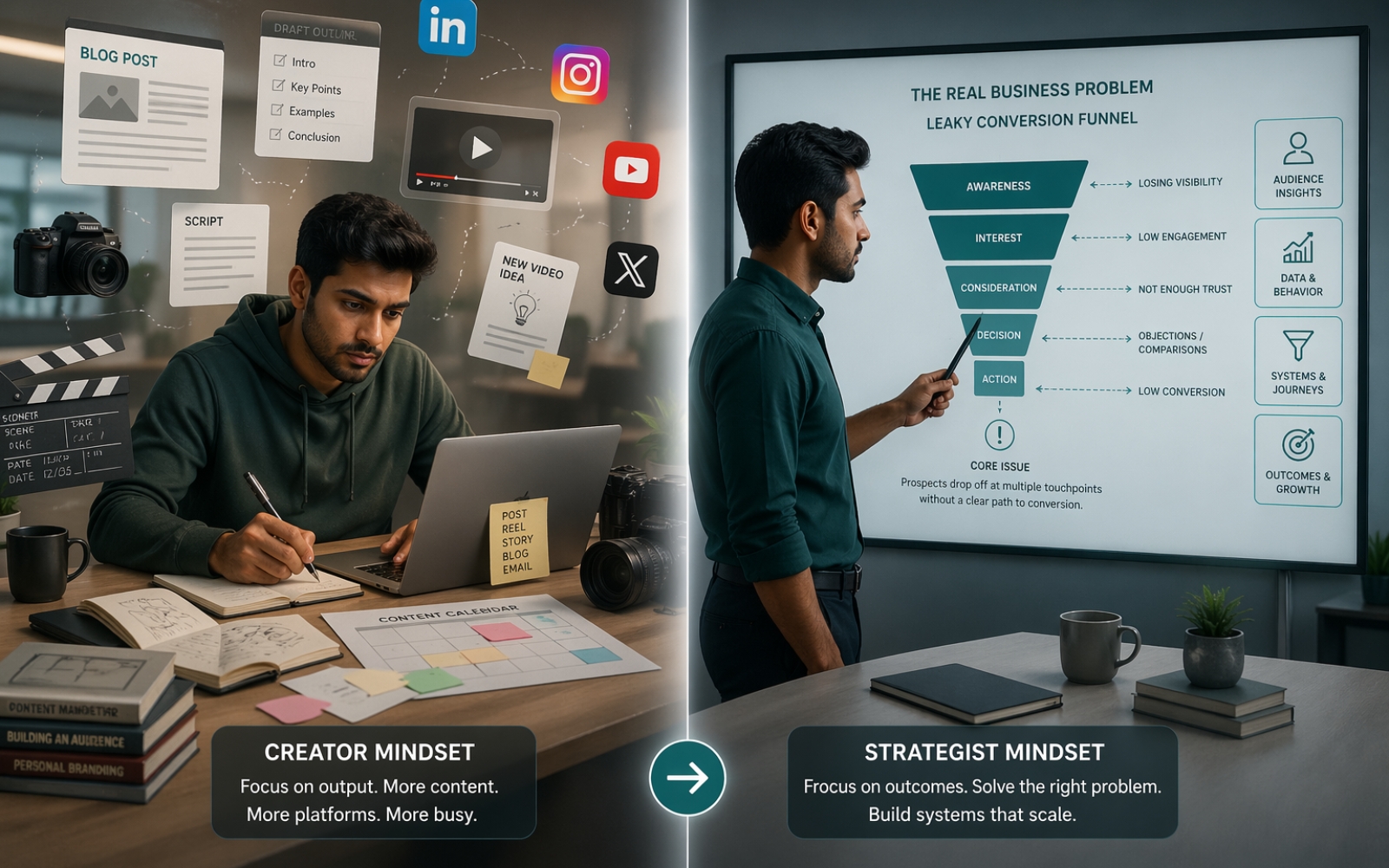
The creator mindset is reactive and execution-focused. A client asks for a LinkedIn post? You write it. A follower wants a tutorial? You film it. The strategist mindset is proactive and diagnostic. Before any output, they ask: “What problem are we really trying to solve?”
This is the first and hardest pivot. You’re no longer the person with the answers; you’re the person who defines the questions. Instead of jumping to “I’ll write a blog series on that,” you pause to map the client’s actual business bottleneck. Is it awareness? Consideration? Trust? Sales enablement? The output might still be a blog, but the reason for it is now anchored to a specific outcome, not just a content calendar slot.
From building an audience to engineering outcomes
Audience size is a vanity metric for the creator. For the strategist, it’s a potential asset—if activated correctly. The shift here is from growing followers to orchestrating journeys.
A creator celebrates a viral reel. A strategist asks: “Did that reel attract the right people, and did we have a path for them to take the next step?” They build systems—content clusters, email sequences, lead magnets—that guide a stranger toward a meaningful business outcome (a discovery call, a software trial, a whitepaper download). Your expertise isn’t in making something popular; it’s in designing a pathway that turns visibility into value.
From volume to authority (and why they’re opposites)
The creator equation often looks like: more posts = more growth. The strategist knows this is a trap. In a noisy market, volume is just more noise. Authority, however, is a scarcity.
Authority is built by taking a clear, sometimes contrarian, stance on a specific problem your ideal client faces. It’s published in a well-researched whitepaper, not ten quick tips. It’s shared in a focused LinkedIn post that challenges a industry myth, not a daily motivational quote. You trade frequency for depth. You stop trying to be everywhere and start being unmissable in one critical arena. This feels risky—you’re posting less, seemingly reaching fewer people—but you’re attracting higher-intent, higher-value engagements.
From personal brand to scalable system
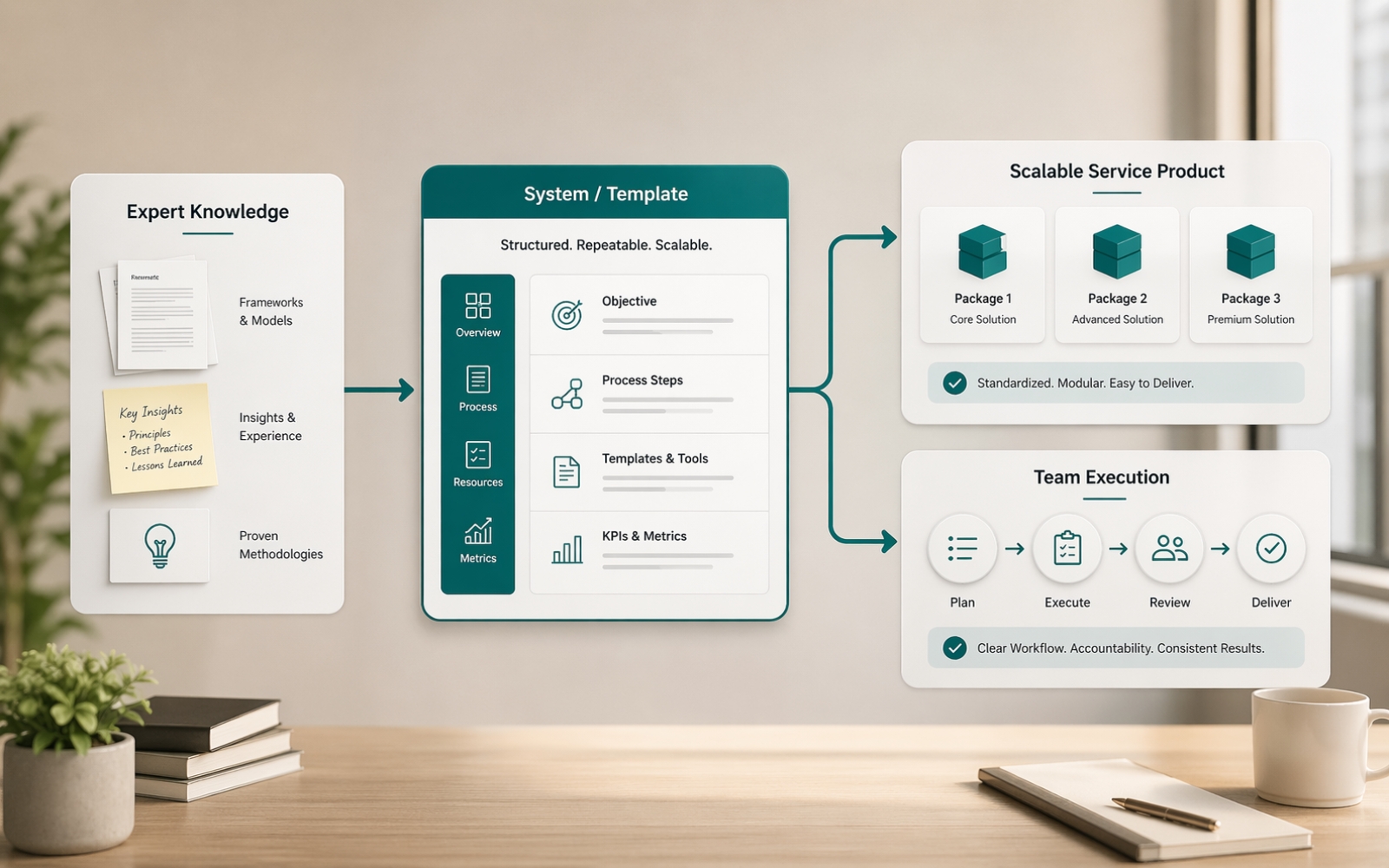
This is the operational heart of the transition. The creator is the brand. If they don’t work, the output stops. The strategist builds a brand that can operate beyond their personal bandwidth.
This means documenting your processes. It means creating templates for your signature frameworks. It means hiring or partnering to execute while you focus on the high-level architecture. The goal is to productise your expertise. Instead of selling hours of your time for content creation, you sell a strategy document, a workshop, a licensing agreement for your methodology, or a retainer for strategic oversight. Your intellectual property becomes your inventory, not your time.
The mindset shift: from expert to architect
Ultimately, this transition is a mental one. You must let go of the immediate gratification of creation—the joy of writing a killer line or editing a perfect clip. Your new source of satisfaction comes from designing the conditions for success.
You find thrill in the system you built that generated qualified leads without you posting that week. You feel proud when a junior team member executes a project using your framework and achieves a great result. Your measure of success moves from “Did I make something good?” to “Did this move the business needle?” It’s less glamorous in the moment, but infinitely more powerful and sustainable.
The takeaway
The move from creator to strategist isn’t about adding “strategy” to your service menu. It’s about fundamentally reorienting your brain from output to outcome. It’s less about your next piece of content and more about the next phase of your business. The discomfort you feel? That’s the old identity resisting. The clarity you seek is on the other side of that resistance, where your expertise finally stops being a service and starts being a system.