
Let’s be honest. We’ve all been guilty of it. We pour our hearts into a piece of content—a blog, a guide, a video. We optimise the headlines, weave in the keywords, hit publish, and then… wait. We watch the rankings climb. The organic traffic trickles, then flows. We feel that familiar rush of validation. The work is working.
And then, just like that, it stops.
The traffic plateaus. The leads don’t materialise. The content sits there, a silent monument to our effort, doing little more than occupying digital real estate. It ranks, but it doesn’t convert. It’s visible, but it’s not valuable in the way that truly matters: moving someone from a curious reader to a committed customer.
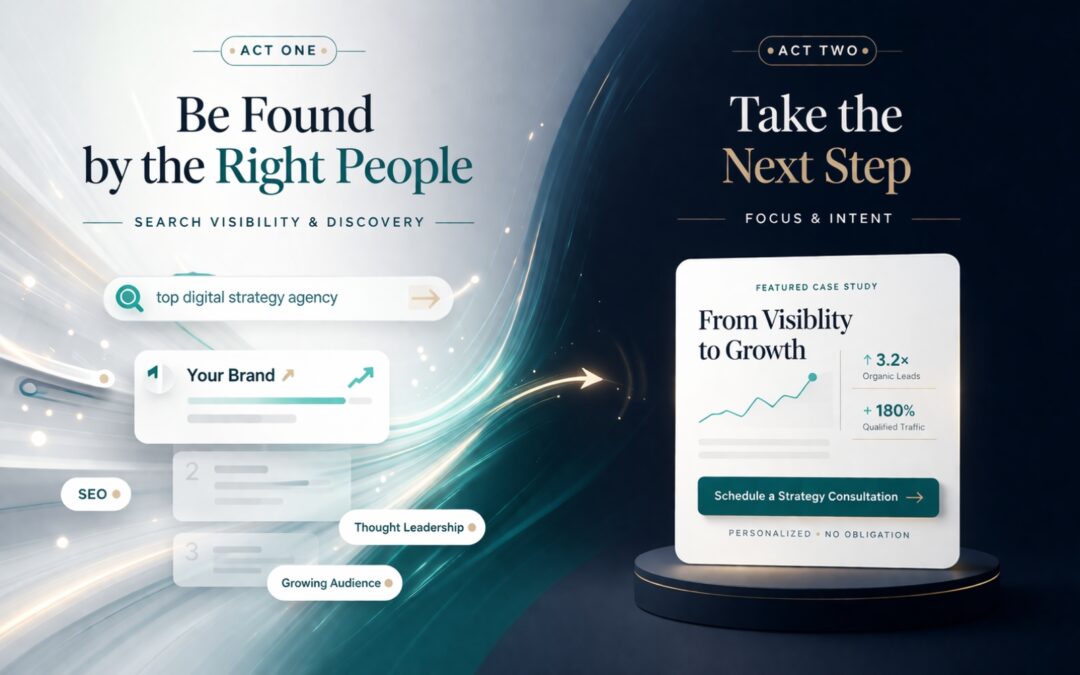
This is the quiet crisis of modern content marketing, especially for Indian brands scaling in competitive markets. We’ve mastered the first act—getting seen. But we’ve neglected the second. The one where content actually finishes the job it was hired to do.
The seo trap: when visibility feels like victory
For years, we’ve been sold a straightforward equation: good SEO equals good business. Rank for a keyword, and the customers will come. And for a long time, that was enough. In India’s rapidly digitising economy, simply being found was a massive competitive advantage.
But the game has changed. The barrier to entry for “good enough” SEO content has collapsed. AI can spin out a thousand-word guide in minutes. Competitors are all optimising for the same intent clusters. The search results page is now a crowded, noisy marketplace where ranking position #3 might as well be #13 for all the attention it gets.
Worse, we’ve started to conflate activity with outcome. A full content calendar? Check. Consistent publishing? Check. Rising domain authority? Check. But if that activity isn’t systematically engineered to guide a reader toward a next step—a demo, a consultation, a purchase—it’s just intellectual decoration. It’s content that has successfully completed its SEO homework but failed its business exam.
What a ‘second act’ really means
A second act isn’t about repurposing a blog into an infographic (though that’s part of it). It’s a fundamental mindset shift. It’s designing your content with a dual purpose from the very first outline:
- Act One: The Attraction. This is the SEO-optimised, top-of-funnel piece. Its job is to answer a broad question, solve a common problem, and earn a spot in the search results. It builds awareness and trust at scale.
- Act Two: The Conversion. This is the intentional, often subtle, architecture within that same piece that identifies high-intent readers and guides them toward a meaningful next step. It’s the bridge from passive consumption to active engagement.
Think of it like this: Act One gets them in the door. Act Two asks them to stay for coffee and see the showroom.
The magic isn’t in creating separate “conversion content.” It’s in weaving conversion pathways into your best-performing, SEO-driven content from the start.
How to architect your content’s second act
This isn’t about slapping a “Book a Call” button on every article. It’s about strategic, contextual nudges that feel helpful, not pushy.
1. map the reader’s evolving intent.
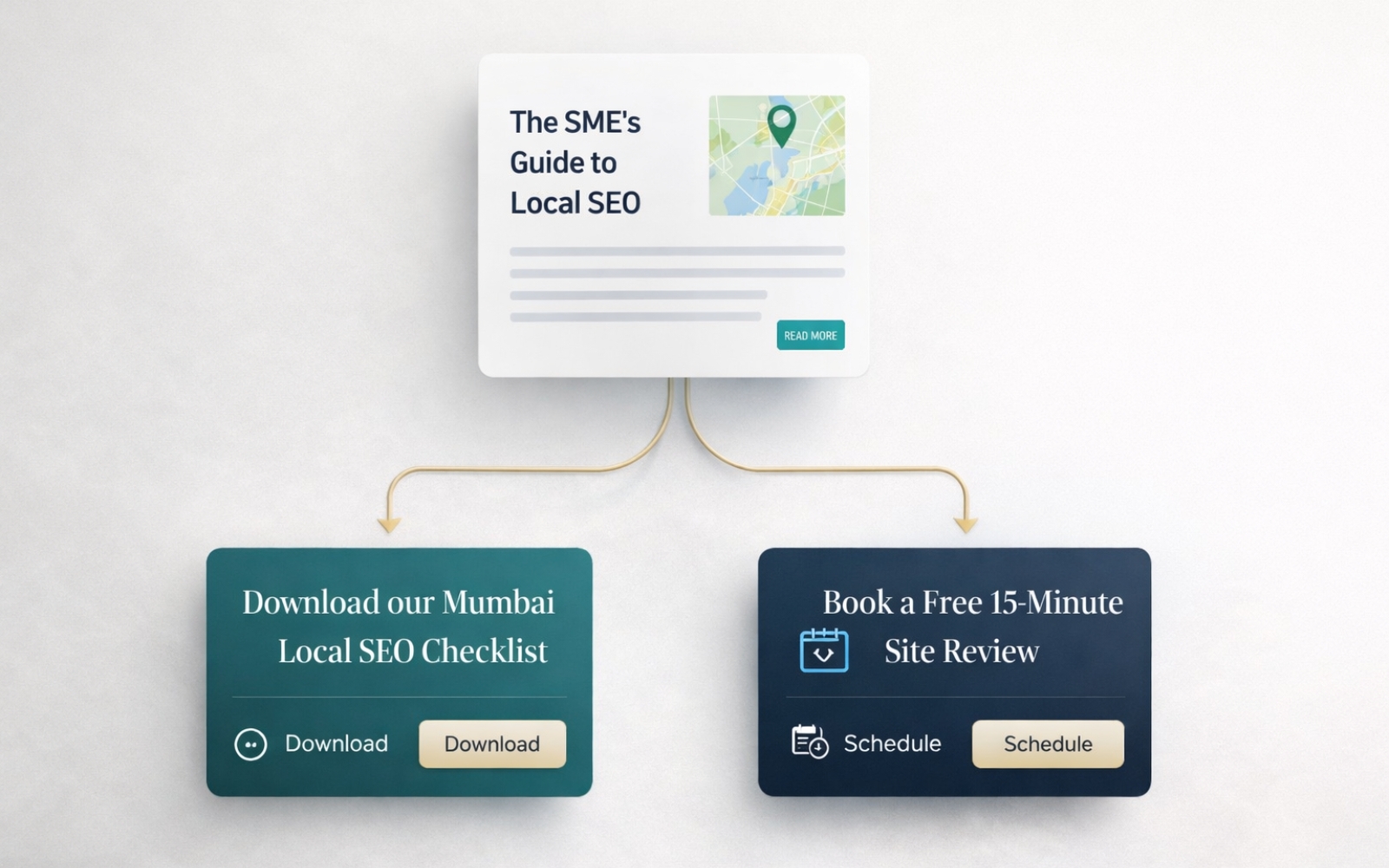
A person reading “what is content marketing?” is in the awareness stage. A person reading “content marketing ROI for B2B SaaS in India” is in the consideration stage. Your second act must match this intent. For the first, your CTA might be “download our beginner’s checklist.” For the second, it’s “see our case study with a Mumbai fintech.” The offer must feel like a logical, valuable next step, not a jarring sales pitch.
2. embed strategic, not random, CTAs.
Ditch the generic “contact us.” Instead, use CTAs that extend the value of the content itself.
- After a guide on “SEO for SMEs,” offer a “free website SEO audit.”
- After a video on “founder storytelling,” invite them to “join our founder-only masterclass.”
- After a case study, provide a “template of the framework we used.”
This turns your CTA from an interruption into a continuation of the learning journey.
3. design for the ‘next logical step,’ not the final sale.
Not everyone is ready to buy. Your second act should have multiple exits for different levels of intent. A tiered approach works wonders:
- Low intent: “Subscribe for more tips like this.”
- Medium intent: “Get the related template/worksheet.”
- High intent: “Schedule a personalised strategy session.”
This ensures you’re not losing the 95% of your audience who aren’t sales-ready today but might be in six months. You’re building a relationship, not just chasing a one-time conversion.
4. use content to pre-qualify your leads.
This is the advanced move. Your second act can actually improve lead quality. A CTA for “a custom strategy audit” will attract a different (often more serious) reader than a CTA for “our newsletter.” By making the next step slightly more committed, you self-select for readers who are truly engaged and see the value in your expertise. It filters out the tire-kickers before they ever reach your sales team.
Why this is your biggest opportunity in 2026
In a landscape saturated with AI-generated, surface-level content, the brands that win won’t be the ones with the most posts. They’ll be the ones with the most intentional posts.
Your competitors are probably still stuck in Act One. They’re celebrating ranking positions while their best content gathers digital dust. By building a deliberate second act into your content strategy, you do two things:
- First, you stop wasting the precious attention you’ve fought so hard to earn. Every visitor who reads your pillar page is a warm lead, not just a metric. You’re systematically nurturing them toward a sale.
- Second, you create a measurable feedback loop. You can now see which types of content (and which second-act offers) actually drive qualified opportunities. This data tells you what your audience truly wants, allowing you to double down on what works and discard what doesn’t—beyond just what ranks.
The final scene
Content that only ranks is like a movie with a thrilling first act and no resolution. It leaves the audience hanging, wondering what it was all for. The second act is where the story pays off. It’s where the protagonist (your reader) takes what they’ve learned and makes a decision that moves their own story forward.
Your content’s job isn’t done when Google approves it. It’s done when your reader does something next. So, go back to your best-performing pieces. Ask: “Now what?” Then, build the bridge. Give your content the second act it deserves—and the conversions your business needs.